
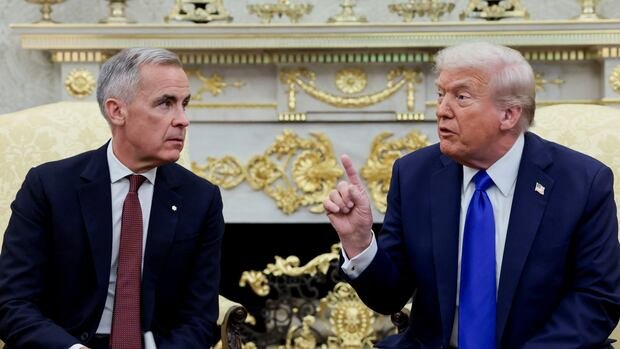

U.S. President Donald Trump announced progress on a trade deal with Prime Minister Mark Carney, expressing optimism that Canadians will appreciate the outcome. The leaders, along with officials from both countries, engaged in discussions at the White House to address issues stemming from the U.S.-Canada trade conflict affecting key industries such as steel, aluminum, auto manufacturing, and forestry.
Trump indicated confidence that Canada would be pleased with the negotiations, emphasizing a commitment to fair treatment in trade relations. Despite initial positive remarks, it became evident later in the day that a finalized agreement was not yet reached, signaling ongoing efforts to resolve trade disputes impacting various sectors.
Following the meeting, Canada-U.S. Trade Minister Dominic LeBlanc conveyed that discussions were productive and substantial progress had been made, although specific details on the deal’s status were not disclosed. Both Carney and Trump directed their teams to continue dialogue to reach mutually beneficial agreements promptly.
LeBlanc remained in Washington to advance negotiations on steel, aluminum, and energy, aiming to align economic and security interests between the two nations. Trump acknowledged the competitive nature between the U.S. and Canada in certain sectors, underscoring the goal of promoting domestic production while pursuing collaborative trade solutions.
The leaders’ interactions were characterized by mutual appreciation, with Trump commending Carney’s efforts in border security and investment initiatives. Carney highlighted Canadian companies’ willingness to invest significantly in the U.S. pending favorable trade terms, aligning with Trump’s focus on foreign investments in the country.
The impact of Trump’s tariffs on Canada’s economy has been substantial, leading to job losses in Ontario’s manufacturing sector and declines in aluminum exports and forestry activities. The tariffs have also contributed to inflation in the U.S. and increased revenue for the government, prompting discussions on potential modifications to the existing trade agreement.
As discussions continue, the urgency to reach a consensus on tariffs persists, with implications for various industries on both sides of the border. Amidst the ongoing negotiations, stakeholders in Canada are closely monitoring developments to secure favorable trade terms and mitigate economic challenges resulting from the trade conflict.