
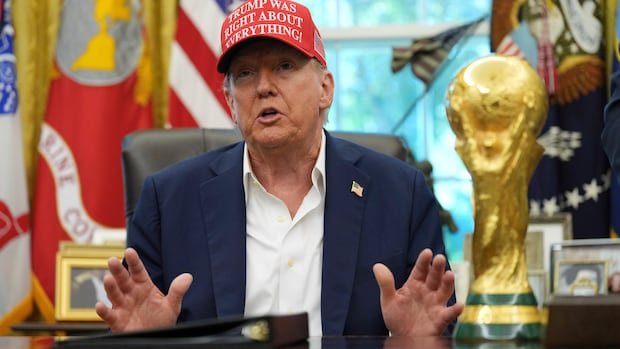

Earlier this week, President Donald Trump issued a threat to relocate World Cup soccer games set to happen at Gillette Stadium. This move is a typical demonstration of power from a president known for his authoritative style of leadership. The threat also highlights a common trend of geographical confusion in today’s world, where many rely on map apps even for short trips. Trump’s remarks also included criticism towards Boston’s mayor, Michelle Wu, despite Gillette Stadium being located in Foxborough, not Boston. This situation is akin to the Ajax Community Centre being associated with Toronto. If Trump has issues with Boston or its mayor, perhaps he should focus on the Red Sox schedule instead.
This threat showcases Trump’s influence in the sports industry, where he often exerts control over decision-makers. While most people do not possess the same level of wealth, platform, or political leverage as the president, many can relate to feeling they could do a better job than sports executives. However, the difference lies in Trump’s ability to translate his ideas into action, sometimes resulting in negative consequences for others.
Despite any criticisms, credit is due to Trump for his involvement with the New Jersey Generals in the old USFL. His intervention led to the team maximizing the talents of star player Herschel Walker, who had a record-breaking season in 1985. However, Trump’s decision-making also played a role in the downfall of the USFL, as he convinced team owners to change their schedule to directly compete with the NFL, leading to the league’s eventual collapse.
In the current era of Trump’s presidency, it is essential to remain cautious and skeptical of his statements and actions. While he may make grand claims, not all of them come to fruition. However, his intentions should not be underestimated, as seen in recent events where his musings translated into real-world actions, such as the military presence in urban centers. This highlights the importance of scrutinizing Trump’s motives and explanations, especially regarding significant events like the World Cup.
In the case of potentially moving World Cup games, it remains uncertain if Trump holds the authority to influence FIFA’s decisions. Host cities for the World Cup are determined years in advance, making last-minute changes challenging and costly. While Trump’s motives for wanting to relocate games may not be entirely clear, his track record suggests a desire to assert his influence on major events.
Overall, Trump’s involvement in sports-related matters reflects his ongoing quest for power and control. While his tactics may not always align with reality, his persistence in making impactful decisions within the sports industry remains a constant element of his leadership approach.