
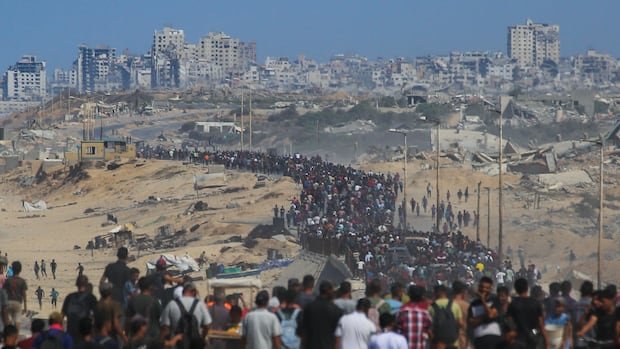

The recent cessation of airstrikes has led to the release of surviving Israeli hostages and the return of hundreds of Palestinians from Israeli prisons. The future of Donald Trump’s Mideast deal remains uncertain, with moments suggesting possible unraveling. While the ceasefire deal has temporarily halted the bloodshed in the longstanding Gaza conflict, it falls short of resolving the underlying issues.
Trump’s portrayal of the ceasefire as a groundbreaking event in the Middle East is viewed as an exaggeration. The agreement represents a form of “negative peace,” emphasizing the absence of violence rather than addressing the root causes of the conflict. Despite acknowledging the region’s historical divisions, Trump’s deal lacks a clear plan for long-term peace between Israelis and Palestinians.
The omission of a clear strategy for a negotiated settlement, particularly regarding the two-state solution, sets Trump’s approach apart from past U.S. administrations. The deal focuses on preventing violence and promoting dialogue without a definitive roadmap for lasting peace. The exclusion of Palestinian aspirations from the agreement raises concerns about its effectiveness in achieving comprehensive regional peace.
To achieve lasting peace in the Middle East, a more inclusive and comprehensive approach is needed, involving all stakeholders and addressing deep-rooted differences. Establishing trust among conflicting parties, engaging in intense diplomacy, and offering incentives for compromise are essential steps towards achieving a sustainable peace agreement. The path to stability and peace in the region is acknowledged to be long and challenging, with the current ceasefire seen as a crucial initial phase in a potentially arduous process.