
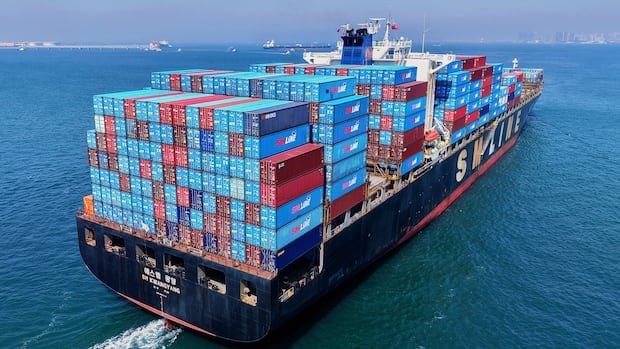

Amidst U.S. President Donald Trump’s persistent imposition of tariffs on Canadian imports, certain American industries are leveling accusations against Canadian rivals for utilizing inexpensive Chinese materials in a manner that violates trade regulations and undermines U.S. businesses.
These allegations surfaced during recent public hearings in Washington regarding the future of the Canada-U.S.-Mexico Agreement (CUSMA). Various leaders spanning different business sectors urged the Trump administration to uphold the trade accord during its upcoming review in July.
Despite these calls, numerous industries, ranging from steel manufacturers to truck-parts suppliers to kitchen-cabinet producers, voiced worries over some Canadian and Mexican companies exploiting CUSMA’s preferential trade terms by channeling products containing substantial Chinese-made components into the U.S. market through alternative means.
At the hearings, Luke Meisner, representing the American Kitchen Cabinet Alliance, highlighted that Canada and Mexico had transformed into pathways for Chinese products to enter the U.S., bypassing the significant countervailing duties imposed by the U.S. on Chinese cabinets and materials in 2020.
Meisner remarked, “China didn’t exit the U.S. market; it merely changed the delivery route. We closed the direct route for China, with Canada and Mexico serving as alternate channels.”
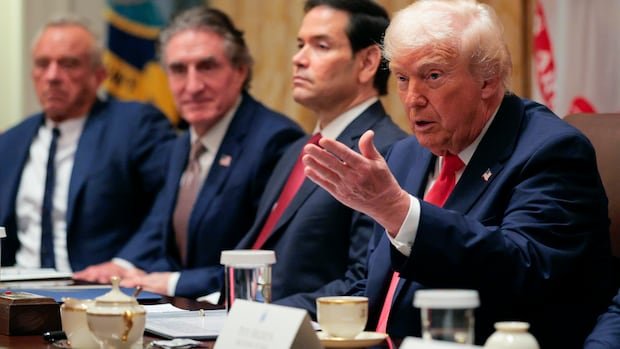
During high-stakes hearings in Washington, business leaders defended the Canada-U.S.-Mexico Agreement on trade (CUSMA). Testimonies from representatives of all three countries emphasized the catastrophic consequences for North American economies if the U.S. withdraws from CUSMA, as President Donald Trump has threatened.
According to Meisner, over the past five years, Canada has significantly ramped up its imports of Chinese-manufactured cabinets and cabinet materials, such as plywood, medium-density fibreboard (MDF), and moulding, while simultaneously escalating exports of finished cabinets to the U.S.
“USMCA should promote authentic manufacturing, not the low-cost assembly of foreign components,” he stressed, utilizing the U.S. acronym for the trade pact.
In October, the Trump administration imposed a 25% tariff on cabinet and vanity imports from Canada and various other trading partners, set to escalate to 50% on January 1. The tariff ostensibly aimed to curb the influx of Chinese-made cabinets into the U.S. via intermediary nations but inadvertently impacts genuinely Canadian-produced goods as well.
The Canadian Kitchen Cabinet Association defended its products as domestically made, cautioning that the U.S. tariffs could lead to an influx of additional foreign products flooding into Canada.
Apprehensions Surrounding Canada’s Steel Imports from China
U.S. steel manufacturers or users alleged that Canadian companies are undercutting American enterprises by utilizing cost-effective inputs from China.
Robert Wahlin, CEO of Stoughton Trailers, a Wisconsin-based manufacturer of transportation equipment like freight trailers, expressed concerns over products from a competitor wholly owned by China International Marine Containers Ltd. (CIMC).