
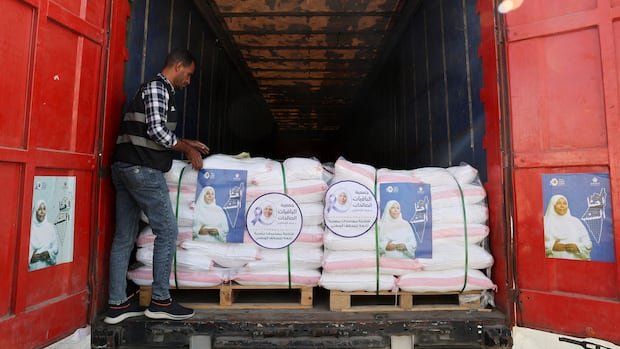

The UN’s top humanitarian official is calling on Israel to fully open all entry points to Gaza to facilitate a significant influx of aid into the region. Tom Fletcher, the UN under-secretary-general for humanitarian affairs and emergency relief, expressed his sentiments during an interview with CBC News from El-Arish, Egypt, following his visit to the Rafah crossing between Egypt and Gaza.
Fletcher emphasized the critical need to significantly ramp up humanitarian aid deliveries, advocating for the movement of “thousands of trucks per week” carrying essential supplies such as food and medicine into Gaza. While some aid has started to flow into Gaza through crossings at Kerem Shalom and Kissufim in Israel, Fletcher stressed the importance of opening additional crossings like Rafah to ensure that civilians receive the assistance they require.
Israel has indicated its readiness to open the Rafah crossing for the transit of people but has not yet allowed humanitarian aid to pass through. The Israeli government clarified that the decision to permit the passage of individuals through Rafah would be announced later, emphasizing that this did not include the transfer of humanitarian aid, which was not part of any previous agreements.
Despite lingering tensions and past conflicts between Israel and Hamas, Fletcher remains hopeful for progress. He expressed optimism about potential developments at the Rafah Crossing in the days ahead.
Accompanied by Samer Abdeljaber, the regional director for the World Food Program in Cairo, Fletcher highlighted the importance of opening more crossings to facilitate access to Gaza and ensure the safety and well-being of its residents. While aid trucks have started to enter Gaza, challenges persist in providing adequate medical care for the population, most of whom are homeless.
Although aid has begun to arrive in Gaza following the recent ceasefire, local groups stress the urgency of accelerating aid operations to address the ongoing needs of vulnerable populations, particularly children. Save the Children’s humanitarian director, Rachael Cummings, emphasized the critical role of humanitarian supplies in alleviating suffering and rebuilding Gaza’s devastated infrastructure, underscoring the necessity of opening all land crossings for efficient aid delivery.
The people of Gaza continue to grapple with the aftermath of prolonged conflict, with extensive destruction of buildings, infrastructure, and essential services. The road to recovery and reconstruction is expected to be long and arduous, requiring sustained support and resources.
In conclusion, stakeholders within Gaza and international organizations are encouraged by the arrival of aid but emphasize the pressing need to expedite relief efforts to address the humanitarian crisis and support the region’s recovery and reconstruction.