
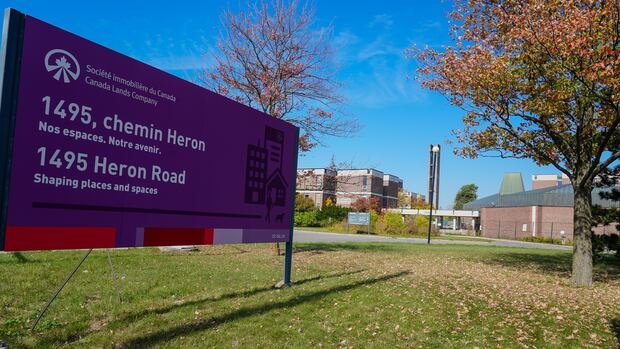

A sprawling vacant campus located on Heron Road is set to be one of the initial six housing initiatives led by a new federal agency with a focus on factory-built housing to expedite construction processes.
The site, measuring 7.3 hectares and situated at 1495 Heron Road, was originally constructed in the 1960s for the Sisters of the Congregation of Notre Dame as a Catholic educational facility known as the Campanile campus. Subsequently, it served as a federal study center for public servants until 2014 before being left unoccupied.
The campus has been earmarked for revitalization by the federal Crown corporation Canada Lands Company (CLC), which took ownership in 2020 and revealed plans to introduce hundreds of residential units on the premises.
Under a new initiative to hasten construction, Build Canada Homes, a $13 billion agency established recently to accelerate housing development, has prioritized the Heron Road complex for the implementation of “factory-built housing.”
Housing, Infrastructure, and Communities Canada has confirmed that construction is anticipated to commence next year, likely in the summer or fall, according to an email correspondence with CBC.
Local residents have expressed a mix of optimism and concern regarding the impending development. Alta Vista Coun. Marty Carr emphasized the government’s eagerness to advance the project, highlighting ongoing community discussions over the site’s future.
The Guildwood Residents Alliance, advocating for a seniors village on the property since 2021, views the introduction of more affordable housing positively while acknowledging uncertainties surrounding the project.
Prime Minister Mark Carney’s announcement of Build Canada Homes included Ottawa as a location for one of the initial six projects without specifying the exact site. The overall initiative aims to deliver 4,000 housing units, with the Heron Road site potentially accommodating around 1,100 units based on previous plans.
The federal housing ministry outlined a “direct-build” strategy for the project, with CLC acting as the developer overseeing the construction of an affordable mixed-income community. Plans involve repurposing heritage-designated buildings on the campus to preserve their historical significance.