
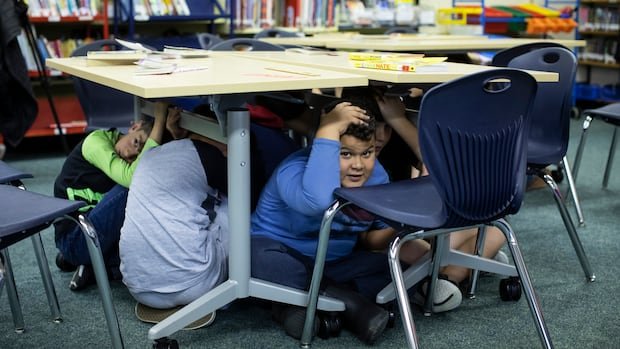

Minutes after a powerful 9.0 magnitude earthquake hits off the coast of Vancouver Island during the summer, a tragic scene unfolds as thousands of British Columbians are either killed or injured in the aftermath. The devastation is compounded by ensuing tsunamis, aftershocks, and widespread chaos.
Survivors, desperate to find their missing loved ones, flood overwhelmed hospitals. The earthquake damages critical road and rail connections, which are further inundated by tsunami waters, leading to shortages of food and medical supplies.
A government risk analysis outlines a grim “megathrust” earthquake scenario, predicting over 3,400 fatalities and 10,000 injuries on the day of the main quake. The report suggests that the disaster’s toll will continue to rise as additional hazards like aftershocks, tsunamis, and fires claim more lives and cause further destruction.
The projected costs of the catastrophe amount to $128 billion, with 18,000 buildings destroyed and 10,000 more severely damaged. The economic repercussions are severe, with a halving of economic growth, significant GDP losses, and job cuts expected to extend over the next decade, surpassing the cumulative impact of all past disasters in British Columbia over two centuries.
The analysis highlights that Vancouver Island and a coastal stretch of the lower mainland, including Vancouver, are particularly vulnerable to extensive damage. This assessment is part of the broader B.C. disaster and climate risk evaluation, which also outlines various extreme event scenarios such as severe flooding in the Fraser Valley, coastal flooding from winter storms, urban fires, and prolonged droughts.
Professor Edwin Nissen, an expert in earth and ocean sciences at the University of Victoria, emphasizes that the report’s estimates are based on simulations. These simulations factor in the earthquake’s intensity, ground shaking, and the structural resilience of buildings based on location, construction materials, and building codes.
Nissen underscores the uncertainties associated with these projections, noting variables like the timing and seasonal conditions during a quake. He explains that winter earthquakes can be more deadly due to higher water content in the ground, increasing risks of landslides and soil liquefaction.
Despite the uncertainties, Nissen advocates for regular updates to emergency preparedness reports to keep pace with evolving scientific and engineering knowledge. The report points out that the last earthquake of comparable magnitude in the region occurred in 1700, highlighting the importance of readiness for such potentially catastrophic events.
Researchers rely on historical accounts from Indigenous communities and scientific studies of the Cascadia fault, which spans 1,000 kilometers from mid-to-northern Vancouver Island to Northern California, to assess the region’s seismic risks. The report suggests a 2-10% likelihood of a similar extreme event occurring within the next three decades, citing the 2004 Indian Ocean earthquake as a comparable event in terms of tectonic characteristics and tsunami impact.
Nissen stresses the unpredictability of such seismic events, emphasizing that they do not follow a regular pattern. He warns that significant earthquakes can occur in quick succession or with centuries in between, underscoring the necessity of ongoing preparedness efforts.
Acknowledging the limited understanding of the Cascadia subduction zone’s seismic activity, Nissen notes the scarcity of moderate earthquakes recorded in the region, highlighting the need for continued vigilance and readiness in the face of potential seismic threats.