
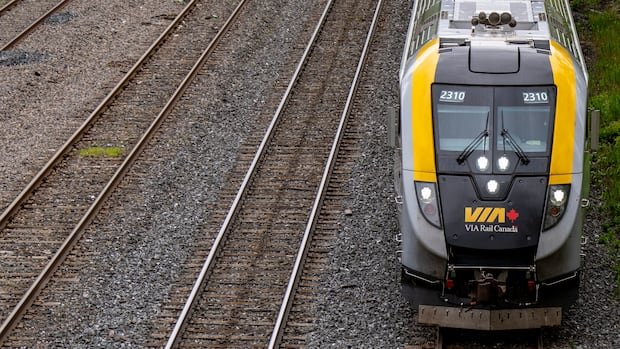

Via Rail has provided $31 million in travel vouchers to numerous passengers who experienced delays of over an hour since last autumn, mainly due to new speed restrictions at rail crossings on CN tracks. Travel vouchers, amounting to 50% of fares, are given to passengers when a train is delayed by more than an hour on the Quebec City-Windsor route, Via’s busiest stretch. The compensation increases to 100% if the delay surpasses four hours.
The $31 million value represents 7% of the total revenues of the Crown corporation in 2024, highlighting the challenges faced by passengers amid significant delays following a conflict with CN during the Thanksgiving weekend last year. Jacques Roy, a retired logistics professor at HEC Montréal, expressed concerns about these penalties, emphasizing the impact on both taxpayers and passengers, labeling it as poor service.
CN implemented speed restrictions a year ago at all rail crossings used by Via, citing concerns that their new trains might not activate safety measures consistently due to their length or weight. Before the conflict, 45% of Via trains along the corridor were punctual in August 2024, dropping to 29% by August of the following year, a noticeable decline that Roy described as disheartening for passengers seeking reliability.
Transport Minister Steven MacKinnon criticized Via’s performance, deeming it unacceptable and detrimental to both passengers and the company’s business strategy. The ongoing dispute between CN and Via revolves around the axle count on Via’s new Venture trains, introduced in 2022, which falls short of CN’s requirements to activate safety features at rail crossings effectively.
To address the persistent delays, Via and CN reached a temporary agreement in August to allow trains to maintain a reduced speed over longer segments without confirming automatic safety system activation, aiming to enhance operational efficiency and reduce passenger disruptions. While initial outcomes are positive, Via spokesperson Karl Helou cautioned that the resolution is still preliminary, emphasizing the commitment to safety while both parties continue to seek common ground on addressing crossing safety concerns.