
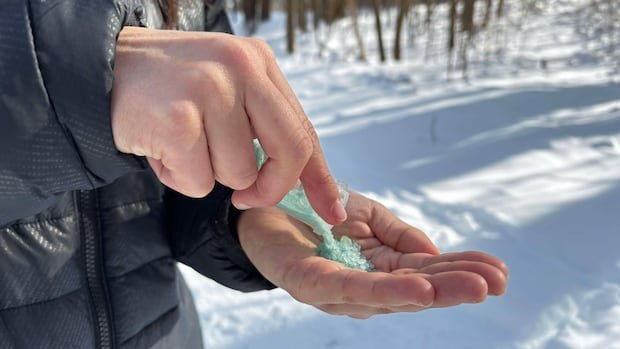

In the midst of a harsh cold spell in southwestern Ontario and a concurrent scarcity of road salt, efforts are underway to explore alternative methods for melting ice on roadways. Researchers at Western University have initiated a study, set to unveil findings later this summer, delving into different substances’ efficacy in ice melting across various conditions.
The study encompasses testing nine distinct substances to assess their ice-melting capabilities. Christopher Power, an associate professor involved in the research, highlighted the prevalent use of sodium chloride (commonly known as rock salt) by Ontario municipalities due to its affordability. However, Power emphasized the environmental and infrastructure drawbacks associated with salt usage.
While rock salt effectively clears ice by lowering water’s freezing point, it poses corrosion risks to metal structures and vehicles. Moreover, the excessive salting of roads leads to environmental concerns, such as the salinization of water bodies like the Great Lakes. The diminishing effectiveness of rock salt below -10°C prompts the investigation of alternative de-icing agents like sodium acetate and beet juice.
The study involved practical trials on Western University’s campus, comparing the ice-clearing performance and corrosiveness of various substances. Despite the absence of a definitive superior alternative to sodium chloride, Power underscored the economic factors influencing municipalities’ choice of de-icing materials. He suggested a nuanced approach to salt application, advocating for supplementary use of less corrosive substances in specific areas like bridges and water bodies.
Amidst the current road salt shortage, municipalities like the City of London are diversifying their de-icing strategies, incorporating sand-salt mixtures as a substitute in extreme cold conditions. Joel Gillard, London’s road operations division manager, emphasized the limitations of salt in extreme cold and outlined plans for enhanced plowing alongside reduced salt dispersion.
In response to evolving environmental and efficiency concerns, municipalities are gradually shifting towards more sustainable and targeted ice management practices.