
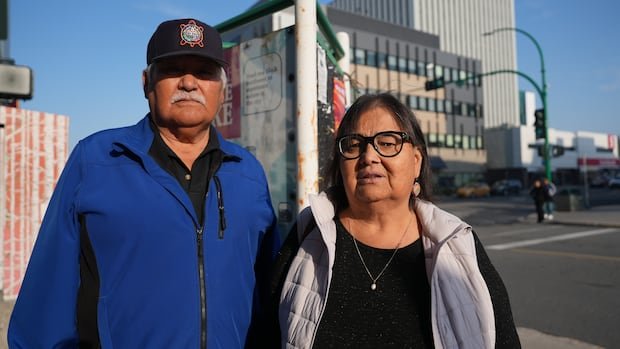

A memorial dedicated to those impacted by residential schools in Yellowknife is likely to be established at Somba K’e Park. The Northwest Territories government, in the early stages of the procurement process, has identified the site adjacent to the playground at Somba K’e Park for the monument.
Advocacy group We Always Remember (WAR), co-founded by residential school survivors in the N.W.T., has long advocated for the construction of a memorial. Doreen Cleary, a co-founder, emphasized the personal impact of residential schools on her family, with some members never returning. She expressed the importance of a monument to honor their memory.
Another co-founder of WAR, Paul Andrew, highlighted the significance of educating younger generations about their family’s history with residential schools. He emphasized the monument’s role in facilitating conversations about this difficult chapter in history.
The monument is intended to serve as a reminder of the ongoing work needed for reconciliation, beyond symbolic gestures such as hiring Indigenous staff or showcasing Indigenous art. The goal is to instigate fundamental changes in attitudes and actions to address the legacy of residential schools.
Marie Wilson, a former commissioner on the Truth and Reconciliation Commission, stressed the importance of monuments in preserving the memory of residential schools. She noted that many Canadians lack awareness of this history, emphasizing the need for educational initiatives.
The N.W.T. government aims to fulfill Call to Action 82 of the Truth and Reconciliation Commission by installing a residential school monument in Yellowknife by June 2027. The territory has a higher per capita number of survivors compared to other regions in Canada.
In the spirit of reconciliation, residential school survivors are leading the decision-making process for the monument’s vision. Despite challenges like wildfires and territorial elections, progress is being made on the project, with regular meetings held since the beginning of the year.
Somba K’e Park’s location was chosen due to its natural elements that align with Indigenous identity, offering a space for healing and reflection. The government is seeking ideas from Indigenous artists in the N.W.T. and Nunavut for the monument’s design, with a deadline set for October 17.