
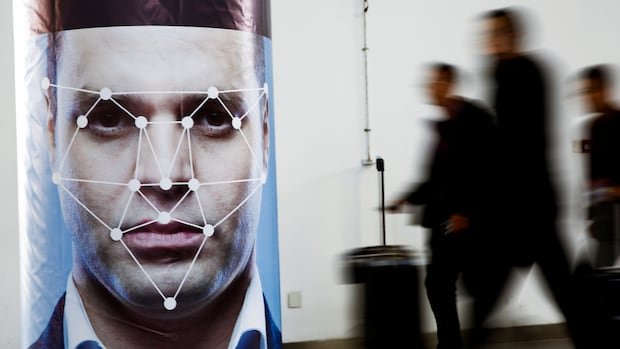

Warren Shepell, a prominent Canadian psychologist, encountered a distressing situation during his recent flight from Cleveland to Toronto. As he was about to board the plane, two uniformed officers approached him on the boarding ramp and one of them took his photograph without any explanation.
This incident is part of a broader initiative by the United States to capture images of Canadian travelers entering and exiting the country through various transportation modes. The U.S. Customs and Border Protection (CBP) has been utilizing facial biometrics for nearly a decade to verify the identities of international travelers arriving at U.S. airports. This involves taking photos of travelers and using biometric facial comparison technology to match their faces with the photos on their travel documents.
The CBP is now expanding this program to include collecting images of departing passengers at all international U.S. airports. Additionally, the agency plans to photograph travelers at sea ports and vehicle lanes at land borders when they enter and exit the country. The full implementation of facial biometric technology at land borders is expected next year, while sea ports and airports are anticipated to have complete implementation within the next three to five years.
To comply with a new rule announced by the U.S. Department of Homeland Security (DHS), non-U.S. citizens, including Canadians, will be required to participate in the facial biometrics program starting December 26. Images of foreign travelers will be stored in a DHS database for up to 75 years.
While CBP states that the facial biometrics program enhances security and immigration law enforcement by accurately recording travelers’ information, it has raised privacy concerns among experts. Critics worry about potential misuse of the data, especially in the absence of federal laws regulating facial biometrics in the U.S.
Despite assurances from CBP that it retains U.S. citizens’ photos for only 12 hours and allows travelers to opt out by requesting manual inspection, concerns remain about the long-term implications of the program. Critics fear that personal data could be misused, as demonstrated by previous instances of information sharing for purposes beyond the original intent.
As the implementation of the facial biometrics program progresses, travelers like Warren Shepell are reconsidering their travel plans to the U.S. due to privacy and security concerns. The potential impact on Canadian tourism and the declining travel numbers to the U.S. are attributed to various factors, including the controversial policies of the Trump administration and the introduction of stringent biometric measures.