
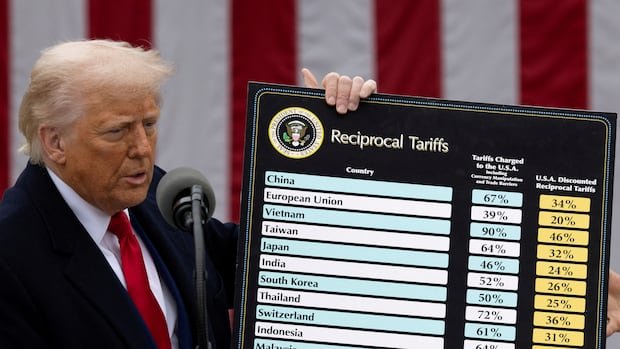

The Trump administration initiated a trade investigation into excess industrial capacity in 16 major trading partners to offset revenue losses from a recent Supreme Court decision overturning Trump’s trade policy centerpiece. Notably, Canada was excluded from the probe. The investigation under Section 301 of unfair trade practices could result in new tariffs on countries like China, the EU, India, Japan, Mexico, and South Korea by summer. Other countries under scrutiny include Taiwan, Vietnam, Thailand, Malaysia, Cambodia, Singapore, Indonesia, Bangladesh, Switzerland, and Norway.
In response to the Supreme Court ruling, Trump aims to recoup lost revenues through alternative measures, emphasizing the protection of American jobs. The administration’s move to invoke Section 301 of the Trade Act of 1974 may lead to the imposition of new import taxes, although the outcome remains uncertain.
The prospect of replacing previous tariffs could reignite global economic tensions, raising concerns about the impact on existing trade agreements. U.S. Trade Representative Greer advised trading partners to adhere to their agreements amidst the ongoing probes, signaling Trump’s commitment to combat unfair trade practices and reduce the trade deficit through various tools at his disposal.
The government’s scrutiny extends to persistent trade surpluses, subsidies, wage suppression, and forced labor, with plans for additional investigations on various issues such as digital service taxes, drug pricing, and ocean pollution. The administration faces time constraints to conclude these investigations, with current tariffs set to expire on July 24, prompting considerations for tariff adjustments.
EU and Asian countries, including China, expressed reservations about the investigations, emphasizing the importance of existing trade agreements as guiding principles in bilateral relations. The European Parliament deliberates on the U.S.-EU trade deal while China and Taiwan defended their trade agreements with the U.S. against the backdrop of the new investigations.