
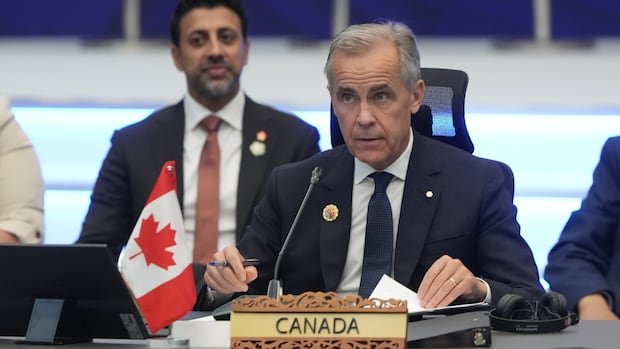

At the ASEAN Summit’s commencement, Prime Minister Mark Carney emphasized the significance of dependable partners who uphold their commitments, subtly contrasting the U.S. President’s escalating rhetoric and tariff threats. Carney refrained from directly addressing the sudden breakdown in negotiations but expressed readiness to resume talks with the U.S. when appropriate. Amidst the uncertainty, Canada aims to diversify trade partnerships and bolster domestic investments.
Despite the lack of specifics on the proposed tariff increase, Trump reiterated his dissatisfaction with Canada and dismissed any plans for a meeting with Carney. The Canadian Minister for Canada-U.S. trade reiterated Carney’s stance via social media, maintaining a diplomatic tone to avoid further provocation.
Carney’s speech in Kuala Lumpur highlighted Canada’s desire for a more significant role in the ASEAN region and emphasized the country’s commitment to rules-based trade and mutual collaboration. The Canadian government is actively pursuing free-trade negotiations within ASEAN, aligning with their principles of free exchange and adherence to international agreements.
As tensions persist, efforts to ease the Canada-U.S. trade dispute have stalled, with Trump showing reluctance to engage in dialogue. Industry leaders stress the need for unified leadership in navigating trade challenges, pointing out underlying concerns beyond the current tariff dispute. The shadow of Trump’s trade policies looms large, affecting diplomatic engagements and trade negotiations.
In a world shifting towards managed bilateral trade, Carney’s strategic approach aims to navigate the evolving global trade landscape. Despite hopes for a resolution at the summit, the deep-rooted issues between Canada and the U.S. remain unresolved, echoing sentiments of uncertainty and the need for continued dialogue and cooperation.