
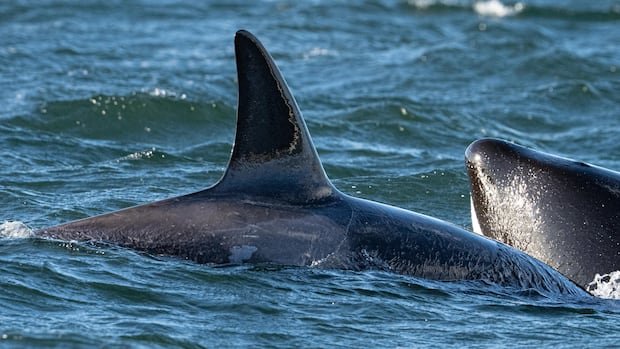

A trio of killer whales recently seen in Vancouver Harbour has sparked intrigue among residents and marine experts. Unlike the typical orcas that frequent the area, these whales are believed to be part of an Alaska population, a novelty for British Columbia waters, as stated by Fisheries and Oceans Canada (DFO).
Experts from DFO are currently examining these unique whales, previously undocumented in the province, to gain insights into their behavior. A team of scientists from Nanaimo, B.C., is actively observing and studying the whales to enhance understanding of their presence in the region.
Jared Towers, the executive director of Bay Cetology, highlighted the distinctiveness of these orcas, noting that they do not belong to the commonly observed West Coast Transient population. Towers emphasized the genetic uniqueness of these whales, as evidenced by their DNA and vocalizations.
The identification of these orcas has been facilitated by their individual physical characteristics, such as dorsal fins, saddle patches, and eye patches. Towers underscored the significance of photo identification in tracking and recognizing individual whales over time, mentioning the rarity of undocumented whales appearing in British Columbia waters.
The unexpected appearance of these whales in Vancouver Harbor has raised questions about their origin and behavior. Marine mammal researcher Josh McInnes pointed out distinctive scars near the whales’ dorsal fins, suggesting encounters with cookiecutter sharks from deep oceanic habitats.
While the exact reason for their presence in Vancouver remains uncertain, experts speculate that these whales may be oceanic in nature. Aly Kohlman, a marine naturalist, expressed interest in the possibility of them being oceanic killer whales but stressed the need for further study to determine their specific population.
The prolonged stay of the whales in the bustling harbor has puzzled researchers, with concerns that they may be psychologically trapped in the high-traffic area. Kohlman highlighted the unusual behavior of the whales, noting that transient killer whales typically do not linger in a single location for extended periods.
As researchers continue to monitor the situation, they urge the public to share any whale sightings and images on Finwave.io for identification purposes. It is essential to maintain a safe distance from the whales, as mandated by Canada’s Marine Mammal Regulations, which require vessels to stay at least 400 meters away from killer whales in southern B.C. coastal waters.