
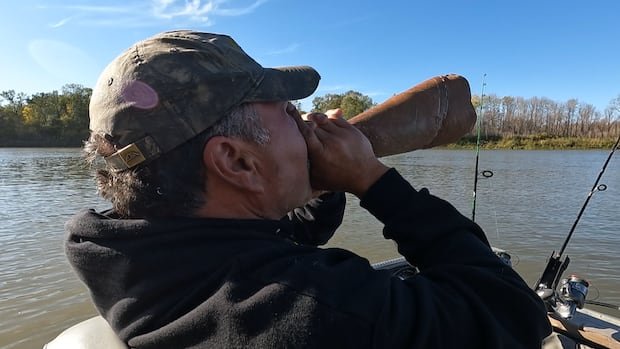

Wayne Cook Sr. reminisces about encountering around 10 bull moose near the river in his childhood days of learning to hunt in northern Manitoba, but nowadays, he considers himself fortunate to spot just one. The 60-year-old used to harvest three to five moose annually in and around Opaskwayak Cree Nation, located about 525 kilometers northwest of Winnipeg, near the Saskatchewan border. However, that number has dwindled to just one moose per year.
Moose meat, once a dietary staple, has evolved into a rare delicacy for the community with a population of 3,500 on-reserve, according to Cook. He stands by First Nations communities in Manitoba that have advised licensed hunters against harvesting on their lands over the past few years.
Expressing his concerns in an interview with CBC News on Sept. 28, Cook stressed the necessity for limitations, emphasizing that some hunters anticipate a moose harvest every year, which is unsustainable. Habitat loss from neighboring hydroelectric and mining projects, compounded by this year’s severe wildfire season, has been major factors driving moose away, as per Cook, who has guided numerous licensed moose hunters from Manitoba, Saskatchewan, and the United States through his First Nation.
Omar Constant, a member of the Diamond Willow Traditional Hunting and Gathering Club in Opaskwayak, noticed a similar decline in moose numbers over the past few decades. The club has adapted by strategically reducing the number of moose harvested along the river and believes that conservation efforts must originate internally.
Reflecting the concerns of Cook and Constant, several First Nations in the province have raised similar issues, with legal challenges initiated against Manitoba’s allocation of moose hunting licenses on their traditional territories by Misipawistik Cree Nation in Manitoba’s Interlake region and Pimicikamak Cree Nation in the north.
The Manitoba Wildlife Federation, representing the interests of Manitoba hunters, has urged the province to halt a limited moose harvest for Indigenous hunters in a portion of western Manitoba due to a drastic decline in population, despite a decade of hunting closures in the area. Treaty-based hunters and Métis harvesters hold constitutionally protected rights to hunt, fish, trap, and gather food without being bound by hunting seasons or bag limits.
In response, Ian Bushie, the natural resources minister for Manitoba’s NDP government, has pledged to safeguard moose populations through scientific measures and partnerships, emphasizing the importance of consultation with licensed hunting communities and Indigenous leadership to develop a joint conservation management framework for the sustainable preservation of hunting traditions.
The Manitoba Wildlife Federation, however, believes the situation is escalating and advocates for alignment among all stakeholders to prevent resource depletion. Marc Kruse, the director of Indigenous legal learning and services at the University of Manitoba’s law school, views the current scenario in Manitoba as critical, emphasizing the need for reconciliation and understanding of Indigenous hunting rights.
Kruse highlights the significance of moose meat for First Nations communities and encourages licensed hunters to comprehend the challenges faced by Indigenous populations. He stresses the importance of building relationships with communities to bridge the gap created by dwindling moose populations and a scarcity mentality.
Kruse’s calls for relationship-building have been met with skepticism by the wildlife federation, which asserts existing partnerships with Indigenous communities and ongoing discussions regarding moose hunting, though specific community names were not disclosed for privacy reasons during their interaction with CBC News.