
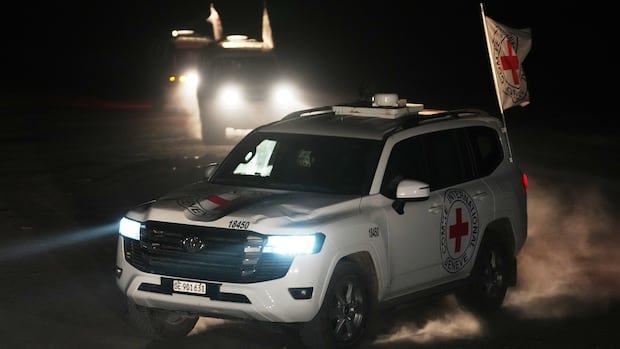

Israel confirmed on Sunday that the bodies of three hostages were transferred from Gaza for forensic examination while a tenuous ceasefire that has been in place for a month continued to hold. Hamas had previously reported the discovery of these remains in a southern Gaza tunnel earlier on the same day.
Since the ceasefire came into effect on October 10, Palestinian militants have released the remains of 17 hostages, leaving 11 still in Gaza before the recent handover. The militants have been gradually releasing one or two bodies every few days. Israel has expressed a desire for a quicker process and has noted that in some instances the remains do not belong to any hostages. Hamas has cited challenges due to widespread destruction in the area.
Israel’s military stated that formal identification of these remains would be communicated to the families initially. Emotions have run high among families waiting for closure, with regular rallies being held. During one such rally in Jerusalem, Moran Harari, a friend of Carmel Gat, called for restraint and emphasized the need to avoid being drawn into further conflict.
In return for the return of the Israeli hostage’s remains, Israel has been releasing the remains of 15 Palestinians. Health officials in Gaza have encountered difficulties in identifying bodies due to the lack of DNA kits. Out of the 225 Palestinian bodies returned since the ceasefire, only 75 have been identified according to Gaza’s Health Ministry.
The exchange of remains has been a key aspect of the U.S.-brokered ceasefire, which includes the establishment of an international stabilization force to secure Gaza’s borders. Various nations have expressed interest in participating in this peacekeeping effort but have requested a clear mandate from the UN Security Council before committing troops.
Challenges remain regarding Hamas’ disarmament, postwar governance of Gaza, and the timing and method of increased humanitarian aid. Israeli Prime Minister Benjamin Netanyahu has stated that there are still Hamas operatives in certain parts of Gaza, which Israeli forces aim to eliminate.
The deadliest conflict between Israel and Hamas began with the 2023 Hamas-led attack, resulting in significant casualties and hostages. The toll of the conflict has been staggering, with Israel and Gaza providing conflicting figures on the number of casualties. Israel has refuted claims of genocide in Gaza made by a UN commission of inquiry and others.