
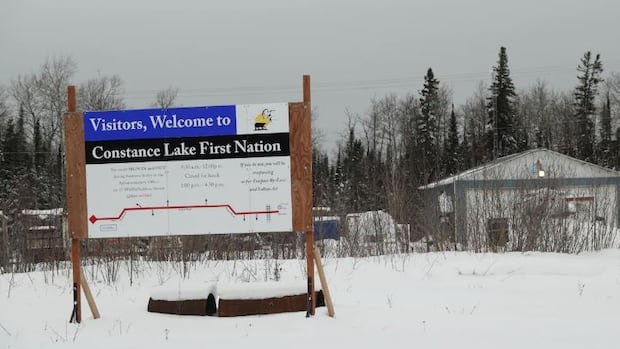

Four years ago, residents of Constance Lake First Nation displayed symptoms resembling pneumonia, yet it was later discovered to be blastomycosis. Over several weeks in late 2021, five individuals in the community of 800 near Hearst, Ontario, succumbed to the fungal disease caused by inhaling spores from decaying wood in moist soil.
Luke Moore, a former chief of Constance Lake First Nation, initiated a coroner’s inquest following the death of his 43-year-old son, who had been healthy until contracting pneumonia-like symptoms and passing away in November 2021. The inquest, commencing on Wednesday in the First Nation, aims to investigate the circumstances surrounding the deaths of Luke Moore, Lorraine Shaganash, Lizzie Sutherland, Mark Ferris, and Douglas Taylor.
Arthur Moore, Luke’s father, expressed concerns that his son was diagnosed with pneumonia instead of blastomycosis, despite an autopsy confirming the latter as the cause of death. Subsequently, four more individuals between the ages of 47 and 67 perished, while many others fell ill, prompting then-Chief Ramona Sutherland to declare a state of emergency.
The community faced uncertainty as the source of the illness remained unknown, leading to school closures, a pause in housing construction, and deep grief among families. The upcoming inquest is anticipated to shed light on unanswered questions and provide closure to the community members affected by the outbreak.
Chasity Finlayson Moore, a witness of the outbreak during her high school years, hopes the inquest will provide clarity on the illness’s origin and the response measures taken. Despite lingering concerns about a potential recurrence, she continues to reflect on the tragedy while studying political science in Toronto.
The initial three days of the inquest, scheduled for October 15-17, will be held at the community hall in Constance Lake First Nation, welcoming attendees. The proceedings, involving 30 witnesses over 25 days, may lead to recommendations from the coroner’s jury aimed at preventing similar fatalities in the future.