
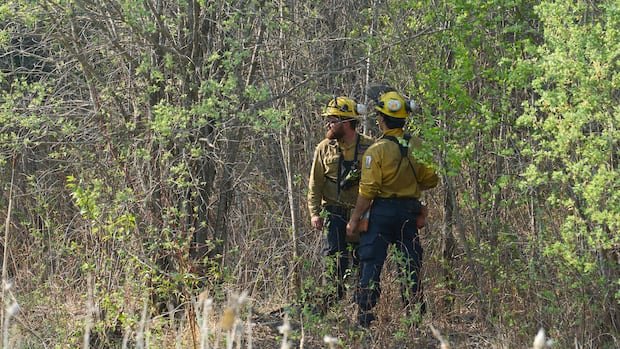

After the wildfire flames have been extinguished, a dense layer of smoke rises from smoldering areas on the ground, contaminating the air with harmful substances that firefighters may inhale for extended periods. According to a former wildland firefighter from Manitoba, this phase of fire suppression represents the peak of poor air quality.
The firefighter, who chose to remain anonymous to avoid potential repercussions, described the aftermath of firefighting as leaving them with black residue in their nasal passages. Despite the health risks associated with prolonged exposure to smoke, the nature of the job requires firefighters to endure these hazardous conditions.
Experts caution that continuous contact with gases and particulate matter during wildfire suppression can have detrimental effects on health. With Canada experiencing longer and more intense wildfire seasons, firefighting crews are likely to encounter heightened levels of smoke exposure.
Christopher Pascoe, an associate professor at the University of Manitoba specializing in chronic respiratory diseases, emphasizes the importance of minimizing exposure to wildfire smoke. While Manitoba provides disposable masks and training to mitigate air pollution risks for firefighters, the effectiveness of protection measures is not straightforward.
During physically demanding 15-hour shifts that involve strenuous activities such as carrying heavy equipment and navigating rugged terrain, the former firefighter mentioned that air quality concerns often take a backseat. Despite using a bandana for minimal protection, the health implications of wildfire smoke remain significant.
Pascoe highlights the short-term effects of smoke exposure, including breathing difficulties and throat irritation, while underscoring the long-term risks of heart and lung diseases associated with repeated exposure. Certain masks, like respirators, offer the necessary filtration to safeguard workers from harmful particles in wildfire smoke.
However, the Manitoba Government and General Employees’ Union raises concerns about the practicality of using bulky face coverings in a demanding firefighting environment. While disposable N95 masks are available to firefighters upon request, their effectiveness is contingent on proper fit and usage.
Respirators with cartridges are considered a more viable option for protection against wildfire smoke, as they can filter out hazardous gases. Nevertheless, challenges such as communication strain and fogging of eye coverings necessitate ongoing refinements in respiratory equipment design.
In response to health risks posed by wildfire smoke, Manitoba Natural Resources Minister Ian Bushie acknowledges the need to balance protection with practical considerations for firefighters. The province aims to address concerns raised by firefighters, such as heat-related issues and breathing difficulties while wearing masks.
Despite efforts to provide respiratory protection gear, challenges persist in ensuring adequate filtration and comfort for firefighters battling wildfires. The complexities of firefighting operations underscore the importance of adopting multiple strategies to reduce smoke exposure and protect the well-being of firefighting personnel.