
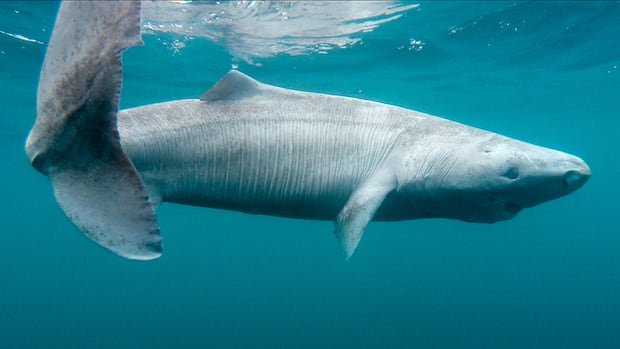

After hearing about a deceased Greenland shark washing up on the northern Irish coast, zoologist Emma Murphy was astonished. These massive ancient creatures are known for being elusive and typically inhabit the remote depths of the Arctic and North Atlantic oceans.
The National Museum of Ireland curator expressed excitement over the exceedingly rare occurrence of a Greenland shark in Irish waters, marking the first such stranding on the coast. Although the species is being analyzed by Irish researchers, one scientist believes the Greenland shark might have a more extensive habitat range than commonly believed.
Initially mistaken for a basking shark by onlookers near Sligo, the Greenland shark was identified through photographs by scientists at the Irish Whale and Dolphin Group. This prompted further investigation by the National Museum of Ireland in Dublin.
The Greenland shark, one of the largest carnivorous shark species globally, is renowned for its impressive size and long lifespan of over 270 years, with some individuals estimated to live up to 400 years. Despite primarily inhabiting the cold waters of the Arctic and North Atlantic, experts suggest that the species may be found in unexpected locations due to their extensive movements in cold temperatures.
Given their deep-sea habitat, Greenland sharks are rarely encountered by humans, making the recent discovery in Ireland a remarkable event for researchers. The opportunity to closely examine the shark, which was a three-meter-long male nearing sexual maturity, provided valuable insights into its biology and potential age of around 150 years.
The scientists, aided by local volunteers, successfully retrieved the shark’s carcass for further examination. While the cause of death remains unknown, initial assessments suggest the shark was in good health before its demise. Plans are underway to preserve the shark’s skin and skull for public display at the National Museum of Ireland, ensuring future generations can marvel at this magnificent and rare creature.