
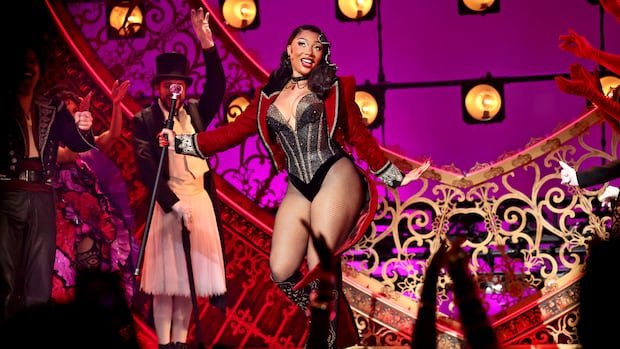

Broadway represents the epitome of live theatre, where skilled performers, innovative storytelling, and artistic bravery converge in a dazzling spectacle. In recent times, it has become increasingly common to witness celebrities gracing its stages, many of whom do not hail from traditional theatre backgrounds. Recent examples include Bob Odenkirk and comedian Bill Burr in “Glengarry Glen Ross,” rapper Megan Thee Stallion in “Moulin Rouge!,” and Kim Kardashian producing the prison drama “The Fear of 13.”
Moreover, pop star Pink is set to host this year’s Tony Awards, the theatre world’s equivalent of the Oscars. While this trend can be thrilling for audiences, it prompts a crucial question: Are celebrities reshaping the essence of Broadway? This shift underscores a practical reality – finances. The costs associated with staging a Broadway production have nearly doubled in the past decade, accompanied by a rise in ticket prices.
In this high-stakes landscape, casting celebrities offers a sense of security as well-known figures attract their fan bases, media attention, and cultural recognition, translating directly into ticket sales. A recent study by Kyle Maclean and Fredrik Odegaard from Western University’s Ivey Business School delved into the link between celebrities and revenue on Broadway. Analyzing 290 shows from 2009 to 2015, the study revealed that it was the celebrity’s “well-known factor” that drove revenue growth.
Chris Peterson, the founder of OnStage Blog, notes that with the right individual, a celebrity can elevate a production, citing Maya Rudolph’s successful stint in “Oh, Mary!” However, he points out that today’s audience expects more entertainment value from stunt casting, shifting focus from artistic experimentation.
While some celebrities like Megan Thee Stallion garnered critical acclaim for their Broadway performances, not all experiences were equally well-received. The pressure on show producers to include celebrities stems from financial considerations, as projects without star power risk being perceived as irresponsible decisions in hindsight.
However, the financial success of productions featuring celebrities does not always ensure overall profitability. The reliance on familiar faces has led to a decline in original musicals on Broadway, with a shift towards adaptations of existing intellectual properties. Casting celebrities becomes a strategic move to minimize risks and cater to audience expectations.
The evolving landscape of Broadway, driven by financial pressures, has steered productions towards a tourist-driven model rather than an artistic beacon. While celebrity involvement can bring new projects and diversity to the stage, concerns persist regarding the future of originality in theatre both on Broadway and in regional settings.
There are apprehensions that the industry may transition towards an online model, particularly streaming platforms, in the next few years. This shift is exemplified by the musical “Hadestown,” which is running concurrently on Broadway and London’s West End, with a filmed version set to be screened in North American cinemas.