
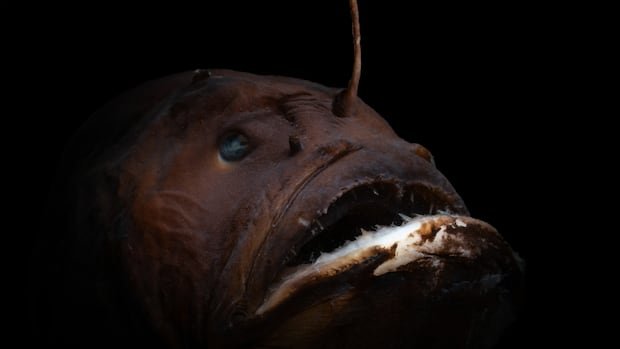

A recent study suggests that the forehead appendage of female anglerfish, known as a lure, may serve a dual purpose beyond attracting prey. Biologist Alex Maile, the lead author of the study, describes these creatures as both captivating and fearsome. The study, published in the journal Ichthyology and Herpetology, analyzed DNA from over 100 preserved anglerfish species to explore how different types of lures may have evolved to enhance reproductive success.
Marine biologist Milton Love, not involved in the research, acknowledges the innovative theory proposed by the authors and emphasizes the importance of exploring new perspectives in established concepts.
Anglerfish exhibit a wide range of diversity across species, with distinct variations in their lures. Maile, a PhD candidate at the University of Kansas, was intrigued by the evolutionary differences in anglerfish lures and embarked on the research to unravel their significance.
Through genetic analysis and computer modeling, Maile and his colleague, Matthew Davis, traced the evolution of anglerfish lures back millions of years. The emergence of bioluminescent lures in deep-sea species led to a surge in anglerfish diversity, suggesting that natural selection played a role in aiding male anglerfish in finding mates in the dim depths of the ocean.
Male anglerfish, significantly smaller than females and lacking their own lures, rely on sensory cues to locate potential mates. Glowing lures and chemical signals play a crucial role in their mating behavior, as males cease feeding once they reach sexual maturity, focusing on finding a female partner.
Bioluminescence as a mating strategy is not unique to anglerfish, with other deep-sea species like lanternfish and dragonfish also utilizing light to attract mates. The evolutionary adaptations seen in male anglerfish, such as enlarged eyes, mirror strategies observed in other bioluminescent species.
Despite the seemingly harsh mating ritual of anglerfish, wherein males attach to females and fuse with them, scientists like Love view this as a natural and successful reproductive strategy for these unique deep-sea creatures.