
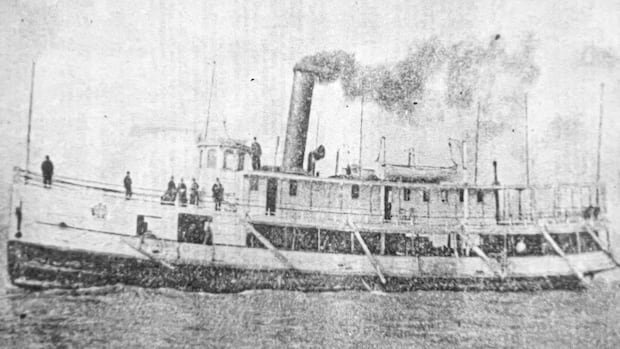

A team of enthusiasts interested in marine archaeology will explore a beach in southwestern Ontario this summer to investigate a tragic shipwreck that occurred over a century ago. The SS Erie Belle, a steam tug, exploded violently in 1883 on Lake Huron near Kincardine, resulting in the immediate death of four individuals on board and leaving two others injured.
The cause of the wreck was identified by archaeology experts as a faulty boiler. However, David Galbraith, a conservation and wildlife biologist, is leading an underwater survey to uncover further details about the incident. Galbraith, who grew up near the site, expressed his long-standing fascination with the wreck and decided, with the encouragement of friends, to document it.
Following the issuance of a marine archaeology license by the province, Galbraith and his volunteer team will commence the survey this summer. The group’s objective is to document the site by measuring, recording, and capturing photographs without disturbing any artifacts. The Ontario Heritage Act strictly prohibits unauthorized individuals from altering or retrieving artifacts from recognized marine archaeological sites.
Galbraith, a member of the Ontario Marine Heritage Committee (OMHC), will dedicate time to the survey at Boiler Beach throughout the summer. His colleague, retired marine archaeologist Scarlett Janusus, emphasized the significance of understanding the region’s history through such initiatives. Janusus highlighted the importance of marine heritage preservation, especially in shedding light on the circumstances leading to the SS Erie Belle explosion.
Supporting Galbraith’s efforts, Janusus stressed the need for increased marine archaeology projects in the province. Galbraith anticipates his fieldwork extending into August, recognizing that this initial survey is just the beginning of a more extensive research endeavor. As a scientist, he emphasized the iterative nature of inquiry, where every answer leads to more questions.
The team’s work is expected to contribute valuable insights into the maritime history of the Kincardine area and enhance our understanding of past events.