

U.S. Secretary of State Marco Rubio indicated on Sunday that the United States would not assume a day-to-day governing role in Venezuela, apart from enforcing an existing “oil quarantine” on the nation. This stance follows President Donald Trump’s earlier announcement that the U.S. would oversee Venezuela after the removal of leader Nicolás Maduro.
Rubio’s statements, made during television appearances, aimed to allay concerns about potential prolonged foreign interventions or failed nation-building efforts resulting from assertive American actions for regime change.
In contrast to Trump’s broad assertions of temporarily “running” the oil-rich country, Rubio emphasized a more nuanced approach. He highlighted the continuation of enforcing an oil quarantine on sanctioned tankers, a measure in place before Maduro’s ouster, to leverage policy changes in Venezuela.
Trump reiterated later that “we’re in charge,” while interim Venezuelan leader Delcy Rodríguez extended a conciliatory invitation to collaborate with the U.S. Rubio emphasized the ongoing oil quarantine as a significant leverage point to push for beneficial changes in Venezuela, including improvements in the oil industry and combatting drug trafficking.
Rodríguez’s recent tone shift emphasizes seeking respectful relations with the U.S. and fostering cooperation for mutual development within international law guidelines.
Trump’s repeated assertion of “running” Venezuela raised concerns among Democrats and some factions within his Republican base wary of foreign entanglements. Rubio countered criticisms by stressing the distinctive mission in the Western Hemisphere and the need to judge the current Venezuelan leadership based on their actions.
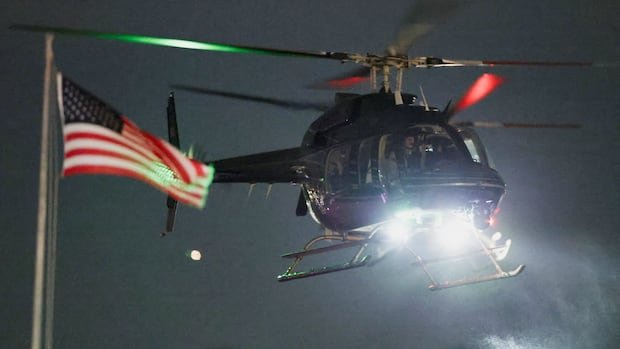
Trump’s remarks about potential military action in Colombia and Mexico, and his comments on Cuba, stirred further discussions on future U.S. involvement in the region. Maduro’s arrival in New York following his extraction from Venezuela, amid ongoing legal challenges and indictments, marked a significant development in the geopolitical landscape.
The quiet aftermath in Venezuela post-U.S. operation highlighted the subdued atmosphere in the capital, with limited activities and heightened security measures evident in key locations. Citizens remained apprehensive, reflecting the uncertainty following Maduro’s removal and the transition period ahead.