
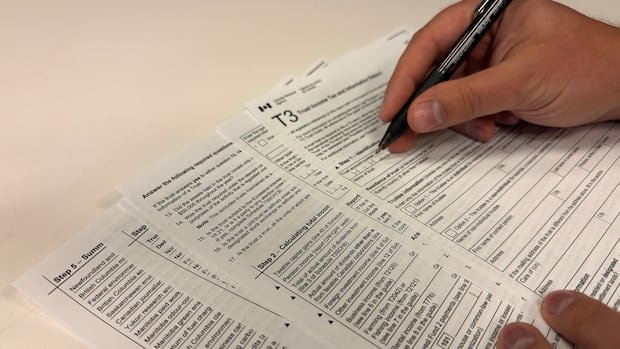

Canada’s tax agency has announced that Canadians holding simple trusts, also known as bare trusts, will not be required to file tax forms for the upcoming tax season. However, legislative changes currently under review in the House of Commons indicate that these requirements are likely to be enforced by 2027.
The Canada Revenue Agency (CRA) revealed on Tuesday that the obligation to file T3 tax forms for bare trusts has been postponed again this year. This decision follows a previous postponement amidst the chaos of the 2024 tax filing season.
Introduced in 2022, new tax reporting regulations for trusts were initially planned to take effect in the 2023 tax year. While these rules aimed to combat money laundering, terrorist financing, and tax evasion, many Canadians with simple bare trusts faced the challenge of completing complex forms.
In a last-minute move in March 2024, the CRA halted the reporting requirements for bare trusts just days before the filing deadline, citing unintended consequences for Canadians.
Bare trusts differ from more intricate trusts created by lawyers at a client’s request, as they can arise unintentionally. For instance, when a parent co-signs a mortgage with their child or when an aging parent lists their children on a bank account for bill payment assistance.
Proposals introduced by the Finance Department in the summer seek to clarify rules and exclude certain straightforward bare trust arrangements.
The CRA’s announcement stated that bare trust reporting requirements will not be enforced while Bill C-15 is being reviewed by the House. However, the agency anticipates that the changes will likely come into effect for the 2026 tax year.
Under the proposed changes, certain bare trusts would be exempt, including those with assets under $50,000 in a calendar year, true joint ownership situations like joint bank accounts held by spouses, and scenarios where a parent co-signs a child’s mortgage for their principal residence.
Ryan Minor from Chartered Professional Accountants of Canada expressed optimism that implementing the new rules next year will provide adequate time for affected Canadians to prepare.
The CRA watchdog criticized the agency for the abrupt pause in 2024, leading to wasted efforts by taxpayers. Despite this, over 44,000 taxpayers submitted bare trust forms in 2024.
Canada’s Taxpayers’ Ombudsperson François Boileau raised concerns about the lack of timely information from the CRA regarding the new filing requirements. Clear guidance will be crucial to prevent confusion with the upcoming updates, according to Minor.
Filing bare trust forms will not result in taxes owed, but failure to file could incur significant penalties. The enactment of C-15 into law will require approval from both houses of Parliament.
For more information, please refer to the source.