
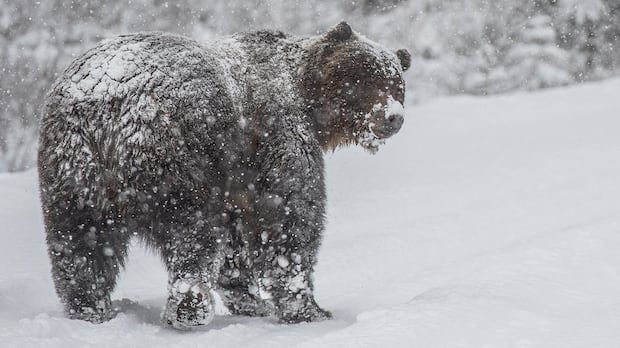

In conversations with scientists, it’s advisable to avoid using the terms “bear” and “hibernate” together. While it’s widely known that bears undergo a deep slumber in winter, the precise terminology for this phenomenon is more intricate than commonly perceived, as indicated by Calgary naturalist Brian Keating.
The debate centers on whether bear hibernation qualifies as such, with professionals preferring the term “torpor.” Hibernation and torpor share similarities, involving a reduction in heart rate and body temperature among mammals. Keating explains that the driving force behind this behavior is the animals’ inability to survive the harsh winter conditions, leading them to enter a dormant phase.
True hibernation, a state experienced by a select few animals in Alberta like ground squirrels and marmots, involves burrowing underground and maintaining body temperatures close to freezing. These creatures essentially go into a suspended animation mode for extended periods.
Contrarily, bears exhibit a different behavior known as torpor, characterized by a state of reduced activity and metabolism. Unlike true hibernation, torpor allows bears to awaken swiftly if disturbed, which can be dangerous given their potential aggression during this phase.
In addition to bears, skunks, raccoons, and certain bats also undergo torpor, a less profound form of dormancy compared to hibernation. Before entering torpor, bears experience hyperphagia, an intense hunger phase where they consume a substantial amount of food to sustain themselves during the winter months.
Among other Alberta wildlife, wood frogs freeze in ice during winter, while garter snakes engage in brumation by clustering in underground hibernacula. The distinction between “hibernation” and “torpor” may be more relevant in scientific contexts, with casual conversations often using the former term.
During winter, encountering bears while hiking or skiing is uncommon but not impossible, particularly with male grizzly bears being the last to hibernate and the first to awaken. Wildlife experts like Nick de Ruyter highlight the importance of bear safety measures year-round, including carrying bear spray to mitigate potential encounters with bears, wolves, or cougars.
Overall, the intricacies of bear behavior in winter underscore the diverse adaptations of wildlife to survive the harsh Canadian winters, with each species employing distinct strategies to endure the cold months.