
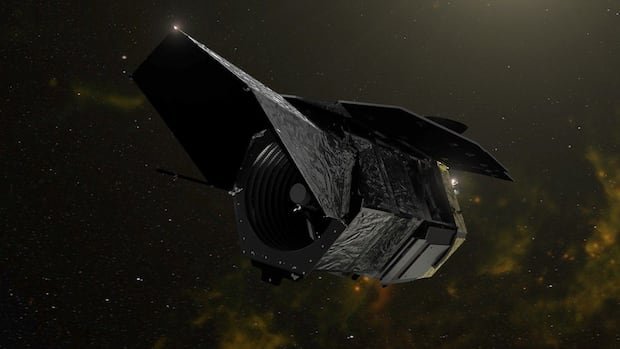

At 7:26 a.m. on Sunday morning, a new space telescope is scheduled to launch from Cape Canaveral, Fla., atop a Falcon Heavy rocket. The Nancy Grace Roman Space Telescope, named after NASA’s first chief astronomer, is set to embark on a five-year mission, with the potential for an extension, to orbit 1.5 million kilometers away at a gravitational balance point known as L2. Different from existing telescopes like the Hubble Space Telescope, the Nancy Grace Roman telescope boasts unique instruments, including a 2.4-meter mirror similar to Hubble’s, a coronagraph for blocking starlight to unveil planets around distant stars, and a Wide Field Instrument capable of imaging an area 100 times larger than Hubble. This enhanced capability allows for detailed surveys of billions of stars.
The telescope’s distinguishing features will enable astronomers to make groundbreaking discoveries. The search for exoplanets, with over 6,300 confirmed to date mainly from the Kepler Space Telescope, will be expanded using methods like the transit method and microlensing. The transit method involves observing starlight dips when a planet passes in front of a star, while microlensing, where the gravitational effect of a planet on starlight is studied, will be utilized extensively by the Nancy Grace Roman telescope to detect Earth-like planets.
Additionally, the telescope will focus on exploring dark matter and dark energy, which constitute a significant portion of the universe. Dark matter, responsible for holding galaxies together, and dark energy, driving the universe’s expansion, remain mysterious phenomena. The mission aims to study dark matter within galaxies and globular clusters, mapping their distribution and structure. By shedding light on these enigmatic cosmic elements, the Nancy Grace Roman telescope will deepen our understanding of the universe’s fundamental forces and dynamics.
In summary, the Nancy Grace Roman Space Telescope’s advanced capabilities and unique instrumentation position it as a vital tool for unraveling the mysteries of the cosmos, from exoplanets to dark matter and dark energy.