
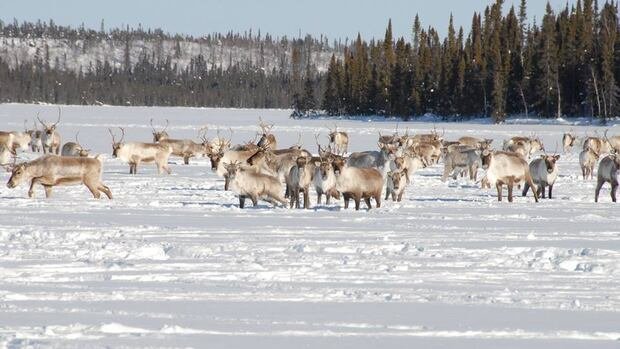

Two recently released maps exhibit the changing migration routes of the Bathurst caribou amid a significant decline in their population. One map was unveiled in a digital global atlas on Dec. 18 by the Global Initiative on Ungulate Migration (GIUM), showcasing various species’ migrations worldwide, including the Bathurst caribou’s route. The second map, presented in a fact sheet alongside the first map, illustrates a notable reduction in the overall migration range since 2000.
Over the past 30 years, the Bathurst caribou population has plummeted by 98%, dropping from 400,000 animals to less than 4,000, as reported by GIUM. A recent government report from the Northwest Territories in November revealed an almost 50% decrease in the Bathurst caribou population over the last three years.
Elie Gurarie, the principal investigator for the Fate of the Caribou Project, emphasized that various factors, including infrastructure development like roads and mines, climate change, and predators, have collectively contributed to the sharp decline in the herd’s population. Caribou tend to avoid crossing roads and being near mining infrastructure, altering their traditional visiting patterns due to fragmentation and avoidance.
The latest map also indicates a deviation in the caribou herd’s migration path from the boreal forest, likely influenced by climate change. Gurarie noted a significant contraction in the range, particularly around the traditional calving grounds near the Bathurst Inlet.
Despite implementing mitigation measures such as harvest restrictions, the decline in the Bathurst caribou population remains a challenge. Stephanie Behrens, the manager of lands protection and renewable energy resources for the Tłı̨chǫ government, expressed the difficulty in observing the herd’s recovery despite management efforts. Behrens stressed the importance of considering all factors affecting the Bathurst caribou cumulatively for future conservation efforts.
Looking ahead, the Tłı̨chǫ government aims to collaborate with the N.W.T. government on a new joint management proposal. Community tours will be conducted to gather feedback from members, acknowledging the significant impact of the Bathurst caribou’s decline on their way of life and cultural practices as Dene people.