
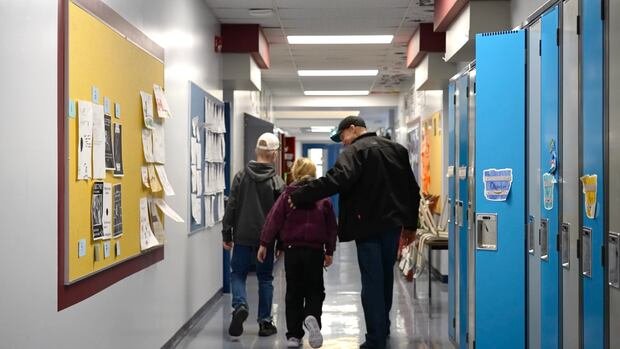

In Alberta, while urban schools deal with overcrowded classrooms, rural schools in places like Byemoor face the opposite issue of declining student numbers. Byemoor’s local school, situated around 140 kilometers east of Red Deer, currently enrolls between 35 to 40 students. If the student count drops below 35, the school risks losing almost half of its provincial funding.
The board chair of Clearview Public Schools, Guy Neitz, expressed concerns about the financial jeopardy facing schools like Byemoor due to declining student enrollment. Neitz emphasized the potential threat to the future of Byemoor and similar rural schools, stating that a significant funding cut could jeopardize their existence, despite community support.
Neitz highlighted the challenges of maintaining a small school like Byemoor if it suffers a substantial funding loss. Clearview Public Schools has reached out to Alberta’s education minister, advocating for revisions in rural school funding methodologies to ensure sustainability.
The closure of Byemoor school could lead to longer bus commutes for young children and the loss of a vital community center, according to Neitz. Scot Leys, the superintendent of Clearview Public Schools, emphasized that rural schools serve as more than just educational institutions, fostering community bonding and socialization.
With operational costs around $500,000 annually and only four staff members teaching multiple grades, Byemoor school already operates on a tight budget. Leys pointed out that if enrollment falls below the threshold, funding would decrease significantly, making it challenging to maintain current staffing levels.
Garrett Koehler, the senior press secretary for the Minister of Education and Childcare, acknowledged the importance of rural schools in communities and highlighted existing support mechanisms in the funding model to assist such schools. Additional grants and funding allocations have been implemented to ensure continued high-quality education for rural students.
The dwindling enrollment in Byemoor reflects broader population shifts in the area, particularly among farm families who have historically been a significant source of students. Maureen Mappin-Smith, a parent and former student, expressed concerns about the potential loss of community ties and opportunities if the school were to close due to declining enrollment.
Kyle Sorensen, another concerned parent, emphasized the far-reaching impact of losing the school on the entire community, stressing the importance of preserving these small towns. Sorensen highlighted that while Byemoor itself has a population of around 30 people, the school serves students from neighboring farming communities as well.
The closure of rural schools due to low enrollment, as seen in Dixonville earlier this year, is a recurring issue requiring attention. Darryl Hunter, an education policy expert, emphasized the value of rural education but stressed the need for a critical number of students for viability. Hunter recommended careful planning if closures become inevitable to minimize disruptions for students.
In conclusion, the challenges facing rural schools like Byemoor underscore the delicate balance between financial sustainability and community support in ensuring quality education for students in remote areas.