


The conflict between the United States and Iran has transitioned from military strikes to economic blockades. The current focus is on which nation can endure the financial pressure better.
President Donald Trump’s strategy of preventing commercial ships from reaching Iranian ports aims to cripple Iran’s oil exports, leading to economic distress that may force Tehran to comply with U.S. terms to end the conflict.
Trump expressed his satisfaction with the blockade’s effectiveness, stating that no ships are attempting to breach the naval blockade in the Gulf of Oman.
However, the outcome of the naval blockade’s impact on Iran’s economy remains uncertain, as the ongoing conflict in the Strait of Hormuz could also significantly harm global economic stability.
During a temporary ceasefire in the U.S.-Iran war, more than 2,000 individuals in Iran, over 200 in Gulf nations and Israel, and 13 U.S. military personnel have lost their lives. Additionally, the conflict between Israel and Hezbollah in Lebanon has resulted in more than 2,100 casualties.
Expert Opinions on the Blockade
Analysts specializing in Iran and blockade economics are divided on which side holds the advantage in this situation.
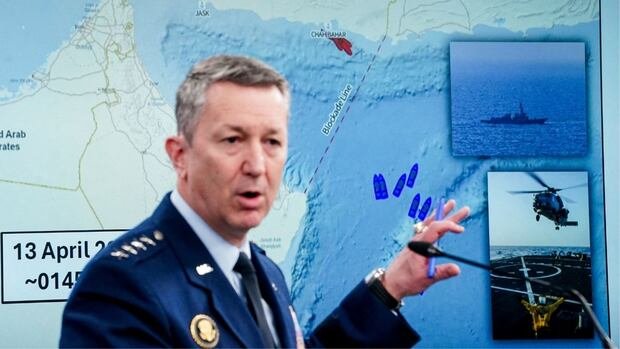
U.S. Chairman of the Joint Chiefs of Staff Gen. Dan Caine states that the naval blockade in the Gulf of Oman applies to vessels of all nationalities traveling to and from Iranian ports.
Former U.S. Treasury sanctions campaign designer Miad Maleki believes that Trump’s decision to blockade Iranian ports is strategically sound. Maleki predicts that the blockade could swiftly devastate Iran’s economy by obstructing trade, halting oil exports, and causing inflation and currency devaluation.
Economic Impact on Iran
Maleki estimates that the blockade could inflict $13 billion US in economic harm on Iran monthly by impeding its seaborne exports and disrupting imports. The severe financial strain would make it nearly impossible for Iran to sustain its resistance.
If Iran’s crude exports via ships are completely halted, Maleki warns that the country’s limited storage capacity might force it to cease oil production within a short period.
Matthew Kroenig, a former defense and intelligence official now affiliated with the Scowcroft Center for Strategy and Security, shares the belief that the U.S. blockade could be effective.
<p