

Canada’s progress in reducing carbon emissions has hit a roadblock, as per the latest federal report to the UN. Emissions from the oil and gas sector have been on the rise post-pandemic. The recently unveiled National Inventory Report for 2024, detailing emissions across various economic sectors, exhibited minimal changes compared to the preceding year.
Dave Sawyer, a leading economist at the Canadian Climate Institute, expressed concerns about Canada’s ability to meet its 2030 emission reduction target. The report, released on April 15 without official government announcement, disclosed a marginal decrease in emissions to 685 million tonnes of CO2 equivalent for 2024, slightly lower than 2023 figures.
While there has been a 10% reduction in emissions since 2005, Canada’s 2030 goal of cutting emissions by 40-45% below 2005 levels seems unattainable based on government projections. The Paris Agreement commitment, enshrined in the Canadian Net-Zero Emissions Accountability Act, seeks to limit global warming impacts by curbing emissions worldwide.
Electricity generation has been a key driver in reducing emissions by 57% since 2005, mainly due to the phase-out of coal plants and increased reliance on cleaner energy sources like hydropower, nuclear, and gas. However, concerns linger over the growing reliance on gas-powered electricity in Alberta and Ontario, with renewable energy sources like solar and wind failing to expand adequately.
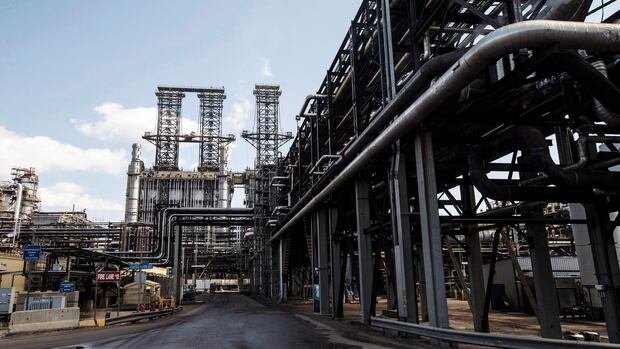
On the other hand, the oil and gas industry, the largest emission source in Canada, continues to expand. Oil and gas production has surged in Alberta and British Columbia since 2024, driven by projects like the Trans Mountain Pipeline expansion and the new LNG export terminal in Kitimat, B.C. Emissions from oilsands production have been steadily rising, offsetting progress made in other emission-reducing sectors.
Addressing the unchecked growth in oilsands emissions is crucial to prevent Canada’s emissions from remaining stagnant. Without decisive action, the current emission trajectory is unlikely to change significantly, according to experts.
[Source](https://www.cbc.ca/news/science/carbon-emissions-climate-canada-unfccc-9.7167013)