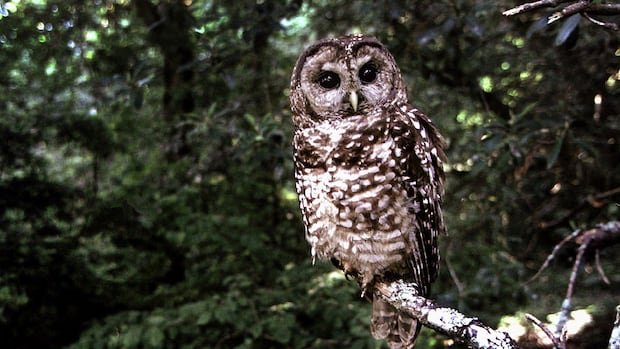

The existence of any remaining wild northern spotted owls in British Columbia is uncertain. The most recent sighting dates back to 2023, after a significant decline in their population over several decades.
Expressing deep distress over the loss, Spuzzum First Nation Chief Janice Kuester emphasized the owls’ cultural significance as knowledge keepers and ancestors providing wisdom and guidance to the community.
Since 2022, the Spuzzum First Nation has collaborated with the provincial government to support the conservation and recovery efforts for the owls.
The habitat of the species spans from the Lower Mainland of B.C. down through Washington state, Oregon, and northern California. While the U.S. still has thousands of these owls, the Canadian population is nearly extinct.
Joe Foy, a campaigner with the Wilderness Committee, remarked that the absence of spotted owls completing their life cycle in old-growth forests signifies the probable extinction of the wild spotted owl.
Despite the grim situation, there is still optimism for the species. Biologist and ecological consultant Jared Hobbs believes reintroducing the species in B.C. is feasible if efforts to preserve recovery options are intensified.

Efforts to secure an emergency order for the owls in 2023 were unsuccessful, as the federal cabinet rejected the recommendation from then-Environment Minister Steven Guilbeault. The government pledged to collaborate with B.C. and Indigenous communities through an ongoing federal recovery strategy, targeting the restoration of a stable owl population of 250 birds.
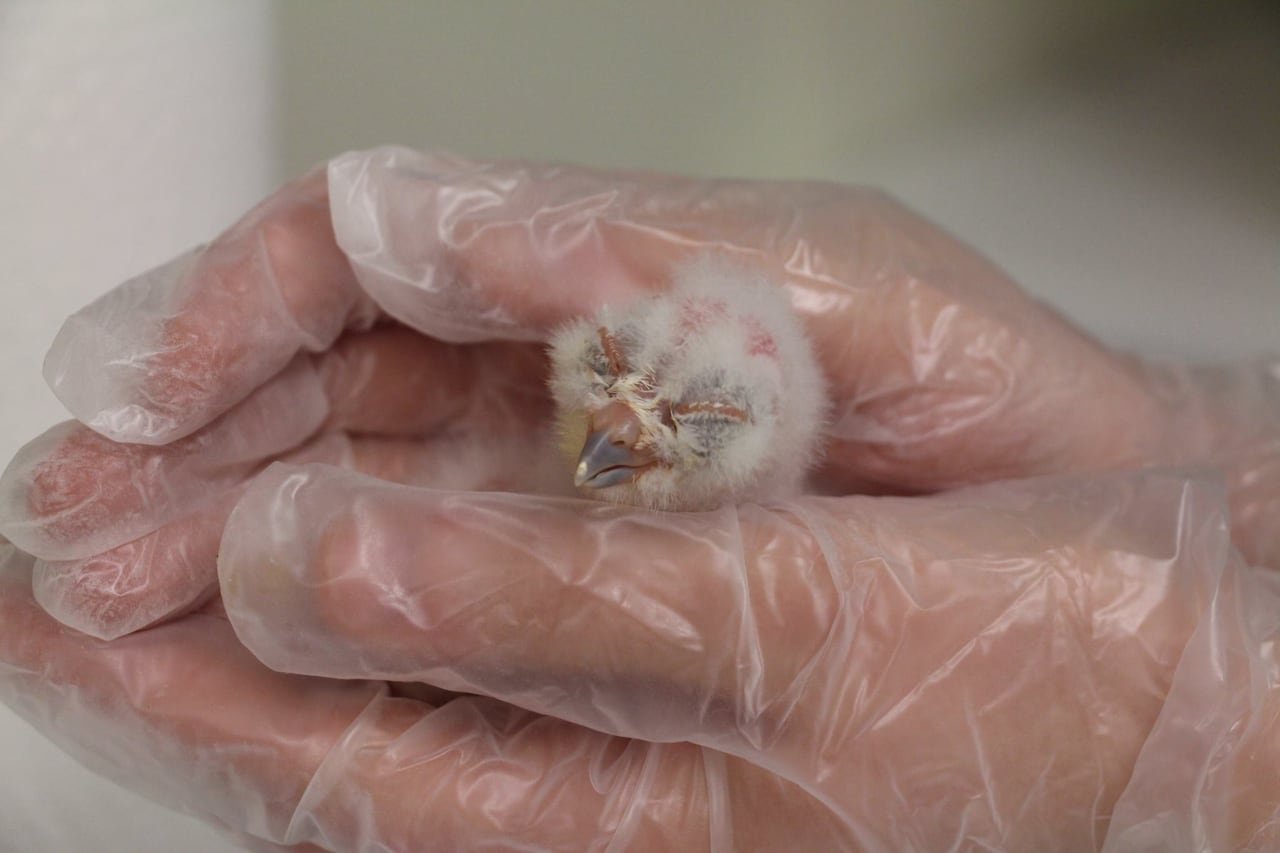
Part of the recovery plan involves releasing captive-bred spotted owls into the wild. The Northern Spotted Owl Breeding Program in B.C. currently houses around 40 owls and is actively involved in breeding and releasing more into the wild.
Science journalist Nicola Jones collaborated with the Langley facility to narrate the species’ recovery in a children’s book, highlighting the challenges and innovations in owl breeding.
The program initiated wild releases of spotted owls in 2022 and has continued these efforts, albeit with some owls found deceased post-release.
Given the program’s evolving nature, Joe Foy stressed the importance of its success, as the alternative would rely on owls migrating from the U.S. to Canada, contingent on maintaining suitable forest habitats.
The spotted owl’s survival hinges on old-growth forests, significantly impacted by logging activities. Recent amendments to the species recovery plan have identified over 4,000 square kilometers of critical habitat in B.C., a crucial step towards safeguarding the species from detrimental activities.
Foy emphasized the urgency of restoring fragmented forests already affected by logging, recounting the challenges faced by wild spotted owls in dense second-growth forests and clear-cut areas.
The second major threat to spotted owls is competition from barred owls, leading to food and habitat conflicts where barred owls typically dominate. While the U.S. has enacted plans to cull barred owls, Canada has yet to implement similar large-scale measures.