
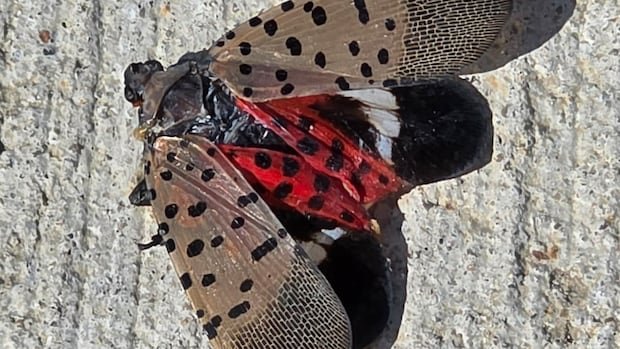

An exotic insect known for its ability to harm grapevines and other vegetation has been identified for the first time in Canada by the Canadian Food Inspection Agency (CFIA). The initial detection took place in Windsor.
While residents of Windsor had previously reported sightings of the spotted lanternfly, this marks the first official identification through an agency survey, as confirmed by the Invasive Species Centre.
The invasive pest poses a significant threat to grapevines, leading to potential losses in the grape and wine industry. Moreover, it can also impact various agricultural sectors, horticulture, forestry, residential areas, and community parks if left unchecked.
Native to southeast Asia, the spotted lanternfly was first spotted in North America in Pennsylvania in 2014. This insect feeds on the sap of more than 100 plant species.
The public is urged by the Invasive Species Centre to familiarize themselves with the appearance of the insect. In case of any sightings of the fly or its eggs, individuals are advised to capture them, seal them in a plastic bag or container, and report them to the CFIA promptly.
Accurate reporting includes providing the location and photographic evidence of the insect. The CFIA will respond to reports of the spotted lanternfly and take necessary actions, such as site surveys and insect collection.
To help in identifying the spotted lanternfly, the Invasive Species Centre and CFIA offer several tips:
– Adults are about 25mm long and 12mm wide with distinct wing patterns.
– Nymphs have varying colors and patterns and are most visible during spring and summer.
– Egg masses are noticeable in the fall and winter, resembling gray smears or seeds arranged in rows.
The spotted lanternfly also excretes a sticky substance called honeydew, which can attract bees and wasps, leading to the growth of sooty mold.
To prevent the spread of this invasive species, individuals are advised to inspect their belongings for any signs of the insect after visiting areas known to be infested, consider thorough cleaning measures, and avoid transporting firewood from one area to another.
This development highlights the importance of early detection and collaborative efforts to safeguard Canadian ecosystems from potential threats posed by invasive species.