
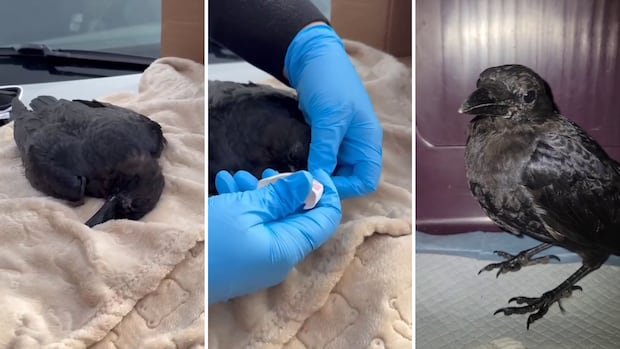

An organization dedicated to animal welfare has been providing nasal naloxone to crows in downtown Prince George, B.C., suspected of ingesting harmful drugs left in the open. The Good Caws Crow Rescue Society (GCCRS) has shared several videos demonstrating their volunteers administering nasal naloxone to unresponsive crows, subsequently showing the birds becoming alert and able to fly once again.
Naloxone, commonly used to reverse opioid overdose effects in humans, is now being used by Dayna Slater of GCCRS to aid crows concentrated in an area known for illicit drug activities. Slater expressed concern over the increasing number of suspected drug overdoses among crows, a significant escalation compared to previous years.
Describing the symptoms observed in affected crows, Slater explained that some birds exhibit signs like spread wings, closed eyes, slowed heartbeat, and unresponsiveness yet remain alive, with some showing a brown liquid foam discharge from their beaks. Despite some casualties, most crows were successfully rehabilitated and released within 24 hours after receiving treatment.
Dr. Kaitlyn Liukaitis from Birchwood Veterinary Clinic, who has treated some of the affected crows, noted that the symptoms align with toxic drug overdose effects. She emphasized the effectiveness of naloxone in reversing these symptoms, mentioning its frequent use in veterinary care across different animal species.
The rise in drug toxicity in various British Columbia cities, including Prince George, has led to multiple public health advisories. The surge in overdose calls in downtown areas, where the crows are found, has prompted concerns about limited access to harm reduction measures due to political resistance.
Slater, collaborating with harm reduction groups, highlighted the essential role of these groups in identifying crows experiencing potential overdoses and providing expired naloxone kits for volunteer use. She clarified that the incidents were likely not intentional but rather symptomatic of broader societal challenges, emphasizing the need for covered garbage cans to prevent wildlife access to hazardous materials.
In conclusion, the situation underscores the interconnectedness between human activities and wildlife, emphasizing the importance of responsible waste disposal to protect vulnerable species like crows from inadvertent harm.