
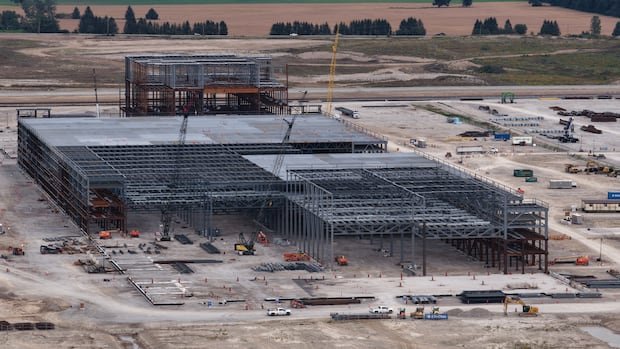

PowerCo Canada, a Volkswagen subsidiary constructing an electric vehicle (EV) battery “gigafactory” in St. Thomas, Ontario, has announced a revised operational start in 2029, delayed by two years from its original schedule. The company disclosed this update while revealing the appointment of Mississauga-based EllisDon Corporation as the general contractor for the factory’s construction.
The decision to postpone the launch to 2029 was made to align the facility with cutting-edge battery technology advancements and maintain adaptability to market fluctuations. Originally slated for a 2027 inauguration, the $7-billion plant, supported by potential federal subsidies amounting to $13 billion, was initially unveiled in 2023. It was anticipated to generate around 3,000 direct employment opportunities and numerous indirect jobs within the region.
Local preparations, including infrastructure enhancements in sewer and road capacities by neighboring municipalities and the provincial government, were initiated in anticipation of the plant’s arrival by 2027. Prior to the factory announcement, a land annexation from Central Elgin by St. Thomas was authorized by the province to accommodate the development.
Major construction contracts for the project were awarded by PowerCo Canada in August 2025, marking the commencement of construction in October 2025, focusing on laying the foundation for the facility. St. Thomas Mayor Joe Preston, an avid supporter of the factory as a key economic catalyst for the city, expressed optimism despite the delay, emphasizing the importance of adapting schedules in collaboration with the selected local Canadian general contractor.
Preston highlighted the ongoing recruitment efforts by PowerCo in the St. Thomas area since August 2025, with an estimated workforce of approximately 500 individuals engaged in the vicinity. He underscored the existing workforce, the active construction at the site, and the development of Yarmouth Yards as factors bolstering confidence in the project’s success.
The selection of EllisDon as the general contractor was positively received by provincial officials, signifying a significant milestone in the project’s progression towards production commencement, expected to generate a substantial number of both direct and indirect employment opportunities. Meanwhile, the Ministry of Economic Development, Job Creation, and Trade expressed eagerness to collaborate with PowerCo on the gigafactory, positioning Ontario at the forefront of innovative battery and automotive production.
In response to the delay, Andrew Lawton, the Conservative MP representing Elgin—St. Thomas—London South, raised concerns regarding Volkswagen’s commitment to the plant, emphasizing the importance of sustaining momentum and ensuring job creation promises are honored. Market dynamics impacting Ontario’s auto industry, influenced by evolving EV demands, were underscored following adjustments made by automakers in their electric vehicle production strategies.
General Motors’ decision to halt Chevrolet BrightDrop electric delivery van production at the CAMI Assembly plant in Ingersoll due to lower-than-expected demand, resulting in worker layoffs, was noted. Similarly, Honda’s postponement and subsequent cancellation of a planned $15-billion EV plant in Alliston reflected the industry’s cautious approach towards EV market developments.
Despite these challenges, Canadian EV sales exhibited growth, as indicated by Statistics Canada data showing a notable increase in new EV purchases by Canadians. The fluctuating EV sales figures underscore the evolving consumer trends and the dynamic nature of the electric vehicle market landscape.