
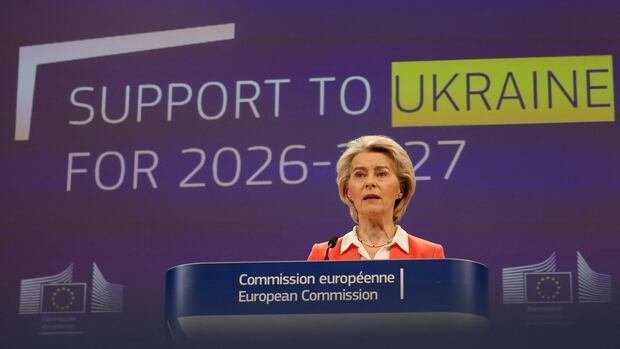

European Union ambassadors have given the green light for the release of a pledged 90 billion euro ($144 billion Cdn) loan to Ukraine and have also endorsed a fresh set of sanctions against Russia. This decision came after Hungary withdrew its objection, as confirmed by the bloc’s Cypriot presidency. The approval from the 27 EU member states is anticipated by Thursday afternoon, according to a spokesperson for the presidency.
Last year, the EU had agreed to provide the loan to support Ukraine financially until 2026 and 2027. However, Hungary had initially blocked the deal, with Prime Minister Viktor Orban accusing Ukraine of disrupting the flow of Russian oil through a pipeline damaged by Russian assaults.
The disagreement had caused a delay in imposing new sanctions on Russia, originally intended to coincide with the fourth anniversary of Russia’s full-scale invasion of Ukraine on February 24, 2022. The impasse was resolved when Hungary’s oil group MOL announced that the Ukrainian operator of the Druzhba pipeline was prepared to resume crude oil transit to Hungary and Slovakia.
MOL expects the initial shipments to reach Hungary and Slovakia by Thursday at the latest, as both countries heavily rely on Russia for energy supplies. The prospects for Ukraine to receive the loan improved after Orban lost Hungary’s parliamentary election on April 12. The incoming leader of the winning party, Peter Magyar, has expressed willingness to support the EU funds for Kyiv, with his assumption of power expected next month.
Initially deemed impossible due to the need for unanimous approval, the idea of joint EU borrowing against the EU budget faced opposition from Orban. However, Hungary, Slovakia, and the Czech Republic eventually agreed to allow the funding scheme to proceed after assurances that it would not have adverse financial implications for them.
The interest-free loan is intended to cover two-thirds of Ukraine’s financial requirements over the next two years, estimated at a total of 135 billion euros ($216 billion Cdn). A significant portion of this funding, 28 billion euros ($44 billion Cdn) annually, is allocated for Ukraine’s military needs, while 17 billion euros ($28 billion Cdn) is earmarked for general budgetary requirements.
Ukraine is not expected to repay the loan from its own resources, with repayment only due once Russia settles war reparations post-conflict. The frozen Russian assets in the EU, valued at approximately 210 billion euros ($351 billion Cdn), could potentially be utilized for repayment without confiscation, as a safer legal alternative.
Brussels anticipates that other supportive developed nations will contribute the remaining funds promised for 2026. This collaborative effort is designed to leverage the frozen Russian assets effectively for Ukraine’s benefit without legal complications.