
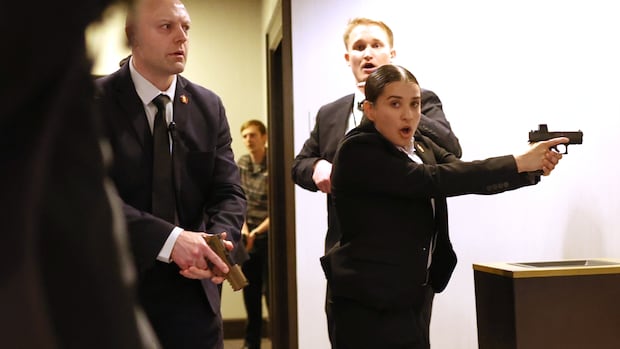

As soon as reports emerged that gunfire erupted at the Washington Hilton during the White House Correspondents’ Dinner on Saturday, social media was flooded with conspiracy theories.
This surge in speculation was anticipated, yet some observers note a notable shift, with conspiratorial narratives being propagated not only by right-wing figures critical of U.S. President Donald Trump but also by liberals and progressives.
“We witnessed a similar occurrence in 2016, but this time it feels more intense, showcasing a growing acceptance of conspiracy theories among the political left, particularly after they have ridiculed those associated with such theories,” remarked Carmen Celestini, a University of Waterloo instructor who researches disinformation and conspiracy theorists.
The incident, which occurred during an event attended by Trump, unfolded in front of numerous influential journalists and editors, who reported detailed accounts live from the location.
However, with the shooter located on a different floor of the hotel, some information took longer to clarify, and certain aspects remain unclear. Additionally, the responses from U.S. officials following the shooting have fueled speculations that the event was orchestrated for political motives.
-
Suspect in White House correspondents’ dinner shooting identified as a part-time teacher and game developer
-
FRONT BURNER
Is this a third assassination attempt on Trump?
Among those contributing to these theories was Democratic Representative Jasmine Crockett from Texas, who shared her thoughts on Threads early Sunday.
“Has there ever been a president with this many close ‘attempts’ on their life?” Crockett questioned. “Perhaps it’s due to lenient gun laws, a lack of mental health funding, or maybe it’s fabricated … who knows …”
Is it all about the ballroom?
On platforms like X and Bluesky, users speculated that the incident was staged to divert attention from the unpopular conflict in Iran, to enhance Trump’s appeal ahead of the midterm elections, or to advocate for the completion of the controversial White House ballroom.
In the immediate aftermath of the shooting, numerous prominent Trump supporters made posts on X highlighting the necessity of the ballroom, leading to accusations that both the response and the shooting were part of a coordinated effort.
Former MAGA influencer Ashley St. Clair stated in a TikTok video that it seemed these conservative figures had conspired to disseminate the same message. “Everything in MAGA is fake, staged, and orchestrated,” she remarked.
In the wake of the incident, Trump and other U.S. officials have continued to advocate for the ballroom, which Celestini argues has further fueled the conspiracy theories circulating online.
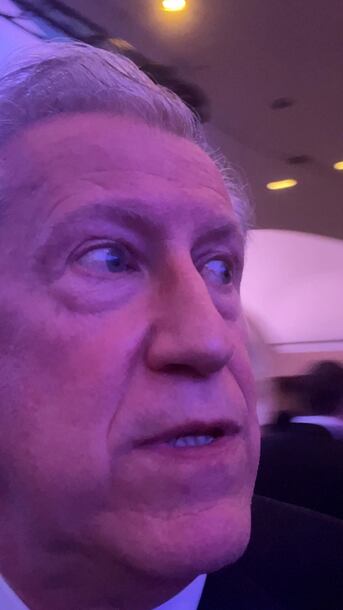
CBC News correspondent Paul Hunter was inside the ballroom and heard shots as an armed man stormed the lobby outside the White House correspondents’ dinner attended by U.S. President Donald Trump.
“We need the ballroom,” Trump stated to reporters on Saturday. He later asserted in a Truth Social post that the shooting would not have occurred if there had been a “Military Top Secret Ballroom.”
The U.S. Justice Department has leveraged the shooting to pressure preservationists to withdraw a lawsuit regarding the $400 million project, a point underscored by acting Attorney General Todd Blanche during a Monday press conference.
On the same day, Congressional Republicans advocated for legislation to expedite the ballroom’s construction using taxpayer funds, citing heightened security concerns.
Smirks, cut calls, and … time travel?
Some individuals are interpreting subtle cues — such as images of Trump appearing to smirk amid the chaos or Press Secretary Karoline Leavitt’s remarks to Fox News prior to the dinner that “there will be some shots fired tonight,” referring metaphorically to Trump’s speech — as indications that the White House had prior knowledge of the events.
In a widely shared video, Fox News reporter Aishah Hasnie is abruptly interrupted while reporting live from the Hilton, prompting some social media users to claim it was evidence of an impending revelation regarding a “false flag” operation. Hasnie denied this in a post on X, explaining, “Our calls were dropping, as there is hardly any service in that ballroom.”
One particularly bizarre theory suggests that a time traveler foretold the assassination attempt. This theory stems from a 2023 post on X by an anonymous account that mentioned the name Cole Allen. The suspect’s name is Cole Tomas Allen.
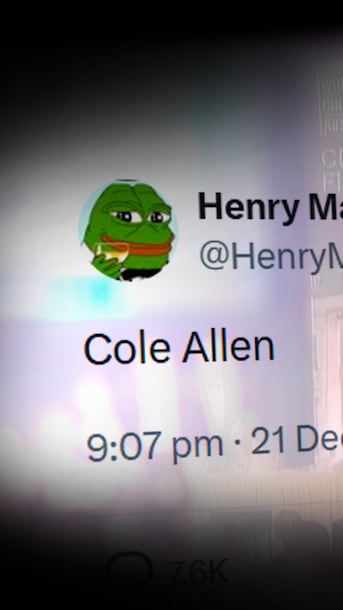
A single post on X has become the focal point of a viral conspiracy theory involving time travel concerning the recent assassination attempt on U.S. President Donald Trump. CBC News’s visual investigations team examines the mysterious X account that some allege predicted the shooting at the White House correspondents’ dinner — revealing a Canadian connection that undermines the theory.
“Conspiracy theories express a sense of injustice, whether real or imagined, and they voice fear,” Celestini stated.
She noted that individuals feeling marginalized under Trump’s leadership, especially those on the left, perceive themselves to be trapped in a perpetual crisis and seek explanations for it.
And, “it can’t be that democracy or the Constitution is failing,” Celestini added.
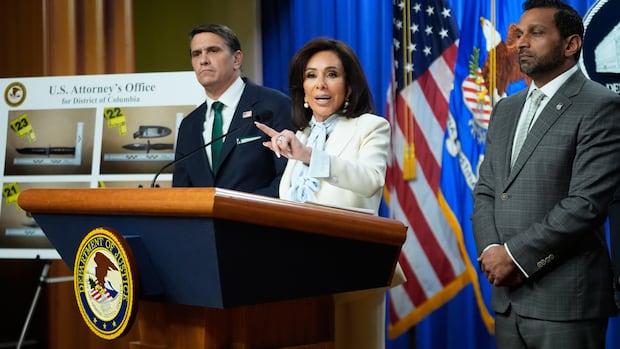
U.S. officials on Monday detailed charges against 31-year-old Cole Tomas Allen following the shooting incident at the White House correspondents’ dinner on Saturday night, including an attempted assassination of President Donald Trump. U.S. Attorney for D.C. Jeanine Pirro stated that further charges will be forthcoming as the investigation continues.
According to Celestini, the Trump administration is fostering mistrust through claims and actions that feel disconnected from ordinary citizens’ experiences — touting inflation statistics and promising lower gas prices while many individuals are facing rising everyday expenses and continuing a conflict with Iran that has raised fears of potential military drafts.
“There’s a feeling of unfulfilled promises among some of his supporters, and we’re witnessing this fragmentation, which allows conspiracy theories to not only form but also gain credibility in some people’s perceptions,” Celestini explained.
A ‘flood of information’
Jen Golbeck, a professor at the University of Maryland specializing in conspiracy theories, stated that a lack of trust in institutions, combined with the difficulty of discerning fact from fiction, creates a “textbook recipe” for the spread of such rumors.
“The allure of conspiracy theories lies in the opportunity to search for clues, even for those who aren’t politically radical,” she shared with The Associated Press.
“It allows individuals to feel clever and valued when they contribute a piece of information that resonates with others.”
Emily Vraga, a professor at the University of Minnesota focused on political misinformation, informed AP that an information overload isn’t always beneficial, especially in a highly polarized environment where individuals curate the facts that align with their own narratives.
“We simply cannot process that volume of information,” she stated. “When there’s an overwhelming flood of contradictory and evolving information, it may lead to a preference for simpler, more comprehensible narratives that can include conspiracy theories.”