

One of its captains was dismissed by the Canadian Coast Guard for allegedly “willfully” neglecting a distress signal regarding a sinking vessel in the treacherous waters of Prince Edward Island, as per a decision released by the federal labour board.
The Federal Public Sector Labour Relations and Employment Board, which made the ruling public last week, remarked, “His misconduct was significant, both in terms of the reputation of the Coast Guard and the implications for public safety.”
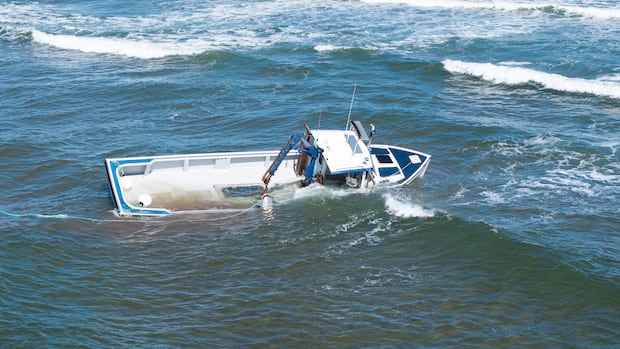
This incident traces back to May 13, 2024, when the mussel fishing boat Knot a Chance ran aground on a sandbar in the notoriously perilous Malpeque Harbour channel and began taking on water in rough seas. Another boat attempted to assist and issued a mayday call, according to the ruling.
At the time the first mayday call was made, the Canadian Coast Guard vessel S. Dudka was approximately 6.3 nautical miles north-northwest of the harbour entrance, but it continued on for about 13 to 17 minutes past the distress location, the document indicated.
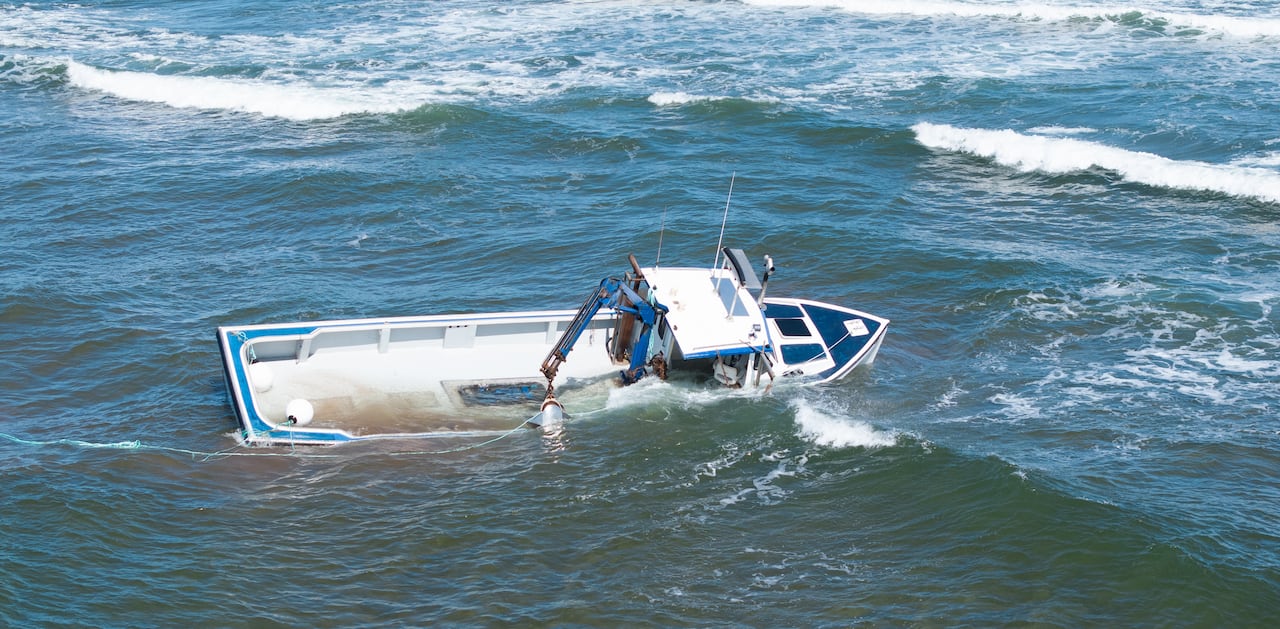
A drone perspective of the submerged boat off Malpeque Harbour in May 2024. (Shane Hennessey/CBC)
Meanwhile, the crew of Knot a Chance faced a perilous situation as the tide rose and waves battered the mussel boat. As the vessel took on water, the five crew members climbed onto the roof for safety, as reported in news articles and captured on video.
At the time of the rescue, no injuries or medical issues were reported among the crew members.
“The waves were really, really big … they were lucky,” a firefighter involved in the rescue told CBC News.
Fired captain claims he was ‘railroaded’
Captain Lou Callaghan was terminated by the Coast Guard for “willfully ignoring a distress call,” a decision he has challenged, asserting he did nothing wrong since he believed Coast Guard vessels should wait for orders before acting on a distress signal.
“He is mistaken; all captains have a legal obligation to respond to a distress call upon receiving it,” adjudicator Christopher Rootham stated while dismissing Callaghan’s grievance.
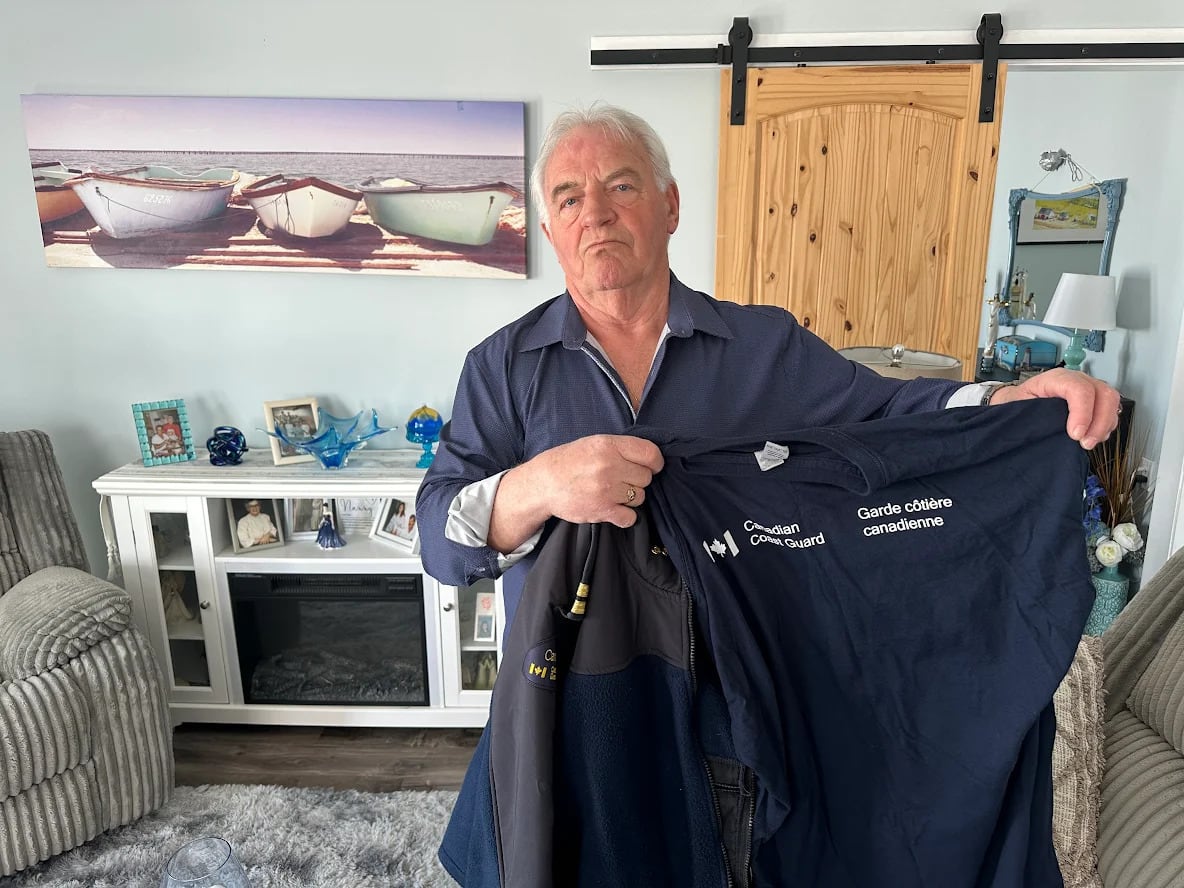
Lou Callaghan maintains he did not act improperly when he was dismissed. (Aaron Adetuyi/CBC)
At his home on the southern side of the island, Callaghan expressed feeling “railroaded” by the decision following two decades of service with the Canadian Coast Guard.
He continues to assert that he would still wait for instructions before responding to a distress call.
“You can’t just take off on a wild goose chase without your coordinates,” he stated. “There needs to be some management in place.”
As detailed in the decision’s timeline, two mayday calls were issued: the first from a fishing vessel on behalf of Knot a Chance at around 8:26 a.m., followed by a relay mayday call from the Marine Communications and Traffic Services Centre (MCTS) seven minutes later, which oversees marine radio communications and vessel traffic.
Captain diminished mayday call volume: ruling
During the hearing, three other crew members testified that they heard the initial call, while Callaghan claimed he did not.
“We didn’t hear it,” he asserts today.
The adjudicator favored the testimony of the other crew members.
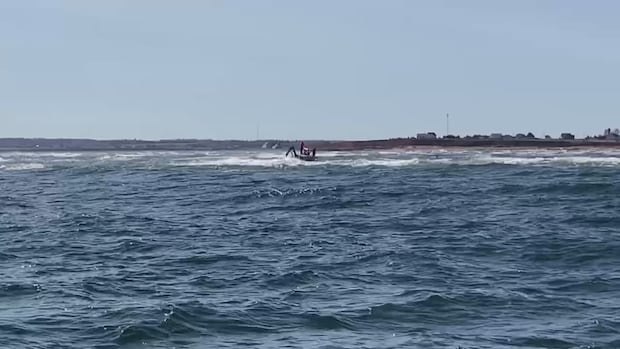
The crew of a fishing vessel that began taking on water on P.E.I.’s North Shore has been rescued, as reported by witnesses at the scene. Video evidence shows the crew awaiting rescuers. Submitted by Timothy Wall.
A deckhand also testified that Callaghan either turned off the radio or lowered its volume to avoid hearing the distress calls. During cross-examination, the former captain provided three different responses.
“Regardless of which of Mr. Callaghan’s explanations I believe, he did something to diminish the volume of the mayday call during a critical situation,” Rootham stated.
“I might have turned it down a bit if it was too loud, but enough that I could still hear it,” Callaghan remarked to CBC News this week.
The decision indicated that the second mayday call, made at 8:33 a.m., provided the coordinates for the Knot a Chance.
A recording played at the hearing revealed that Callaghan contacted marine communications around 8:43 a.m. to inquire if everything was under control and was informed, “if you’re able to assist that would be great.”
Evidence indicated that between 8:51 a.m. and 8:55 a.m., the ship altered its course to head toward the sinking mussel boat.
“He halted, waited over five minutes to receive a second request for assistance, then turned around and proceeded towards Malpeque Harbour,” Rootham wrote.
Callaghan asserts rescue would have posed risks
During the hearing, Callaghan claimed that there was not much his ship could do, a point Rootham found unconvincing.
“At the very least, they could have rescued the individuals from the open-air vessel and moved them to the warmer cabin of the CCGS S. Dudka,” Rootham argued.
Callaghan contended that his crew was inexperienced, the radio was malfunctioning, and that the Dudka itself faced the risk of grounding in the channel.
“It wasn’t an ideal situation for that boat,” he stated in an interview.
The Coast Guard successfully contested the grievance, with Rootham considering three key factors: the potential risk to future lives, the reputation of the Canadian Coast Guard, and the public’s overall trust.
“Everyone was fortunate; that does not excuse the misconduct,” Rootham concluded.
‘No higher authority’ than the duty to save lives
Aldo Chircop, a professor at the Marine & Environmental Law Institute at Dalhousie University, emphasized that maritime rules are unequivocal.
“The obligation of a ship and its captain to provide assistance to vessels or individuals in distress at sea is an established principle of international maritime law,” he stated.
“Under Section 131 of the Canada Shipping Act, the captain of a vessel in Canadian waters is legally required to respond to distress signals, which aligns with the relevant rule in the International Convention for the Safety of Life at Sea.”
A spokesperson for the Coast Guard remarked that this decision reaffirms the high standards of professionalism expected from its personnel and emphasized that the obligation to assist those in distress is foundational to its mission.
“In the Canadian Coast Guard, our motto is Safety First, Service Always. When a mayday is received, there is no higher authority than the immediate duty to save lives,” stated Craig Macartney.
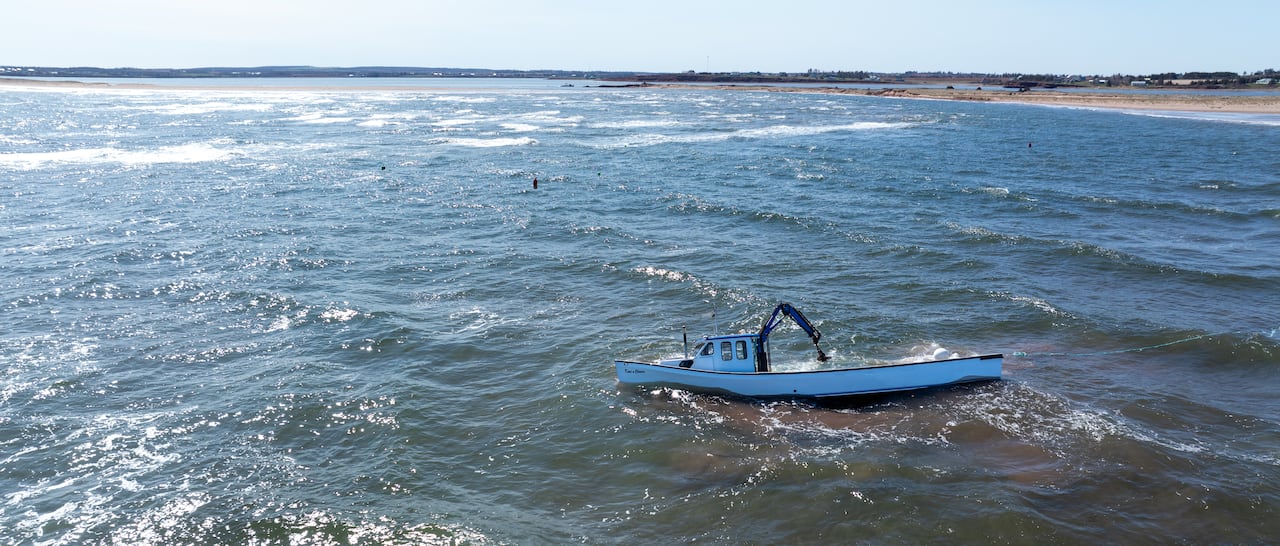
Two distress signals were issued concerning the Knot a Chance. (Shane Hennessey/CBC)
“We have thousands of committed individuals who risk their lives each day to fulfill our mission.”
Callaghan, who cites his unblemished record prior to the May 2024 incident, feels he is being used as a scapegoat for larger issues in the bay.
“There have always been issues in that harbour, with shifting sands and fishing boats grounding for decades,” he remarked.
“I never missed a workday, and I never called in sick … the punishment was extreme.”
While Callaghan intends to appeal, he is uncertain about his future at the age of 73.
“I am advanced in years and likely wasn’t going to work indefinitely, but I didn’t want to exit in this manner,” he expressed.
“I consider it a poor way to conclude.”