
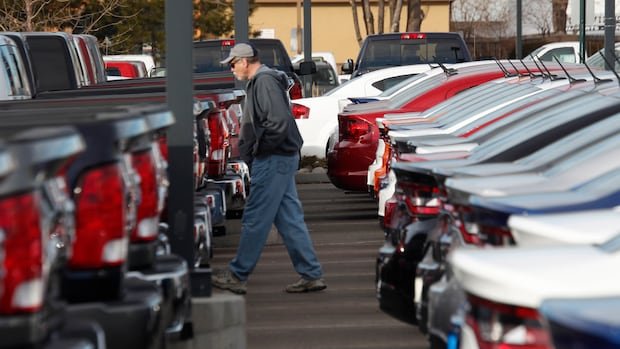

The U.S. auto industry is facing a persistent affordability challenge, potentially pushing more Americans towards used cars and exposing automakers to competition from lower-priced brands. The debate over this issue has become politicized, with President Donald Trump and Republicans attributing it to environmental and safety regulations, while Democrats point to Trump’s tariffs.
A review of industry sales data by Reuters revealed that the lack of budget-friendly models from automakers has led to an increase in the average U.S. vehicle price to approximately $47,000. This shift towards more luxurious vehicles reflects the widening income gap in the U.S., with wealthier consumers driving a larger portion of spending while middle- and lower-income individuals struggle to afford new cars.
The limited availability of affordable options has left consumers like Sarah Merriman from Delaware feeling anxious about finding a replacement for her current vehicle. The dominance of pricier models poses a significant risk for traditional automakers, as it could potentially pave the way for Chinese brands to enter the U.S. market and attract less affluent customers.
The focus on affordability has intensified ahead of the midterm elections, with the Trump administration aiming to lower vehicle prices by relaxing fuel-economy standards. The average transaction price for new vehicles has surged by 40% in recent years, reaching around $47,000. The number of models priced above $40,000 has increased significantly, while budget-friendly options have dwindled.
As a result, the demographic composition of new car buyers has shifted, with households earning $100,000 or less accounting for a smaller share of new vehicle sales. Automakers like GM, Ford, and Stellantis have phased out lower-margin models in favor of higher-profit SUVs and trucks, boosting their earnings despite a decline in sales volume.
To address affordability concerns, some manufacturers are introducing more affordable models. For instance, Ford plans to offer five models priced under $40,000 by the end of the decade, including an electric model around $30,000. Stellantis’ Jeep brand, known for its off-road vehicles, has also made affordability a priority by reducing prices and adding value to certain models.
In conclusion, the shift towards pricier vehicles in the U.S. auto market underscores the broader economic disparities in the country, prompting automakers to rethink their product offerings to cater to a wider range of consumers.