


Bruce Newman, a landscape painter from Fredericton, used to make numerous trips to the United States each year. He would travel with his wife for vacations, engage with fellow artists, or capture stunning landscapes on canvas, often visiting up to twelve times annually.
However, these excursions came to a sudden halt early last year when U.S. President Donald Trump initiated a trade conflict with Canada and proposed that the country should be the 51st state.
Newman mentions that recent incidents in Minnesota, where clashes occurred between protesters and U.S. Immigration and Customs Enforcement (ICE) officers, have only strengthened his determination.
“It’s just a frightening reality that the U.S. is evolving into,” he stated. “I completely disagree with it all. I don’t wish to spend money there to support that kind of situation.”
Numerous Canadians who resonate with Newman’s views are also avoiding travel to the U.S. Together, they have made an impact. Air and land return trips by Canadians to the U.S. fell by 25 percent in 2025.
The trend continues
March marked the 14th month in a row of significant declines, with Canadian return trips to the U.S. dropping 32 percent compared to March 2024 before the boycott began.
“Clearly, the issue persists,” remarked Amir Eylon, president of the travel research firm Longwoods International.
“Some might have thought that Canadian travelers would ‘Get over it.’ That hasn’t occurred,” he noted.
The implications are substantial. The decrease in Canadian travelers contributed to an $8.5 billion USD (4.6 percent) reduction in international tourism expenditure in the U.S. last year, as reported by the World Travel and Tourism Council.
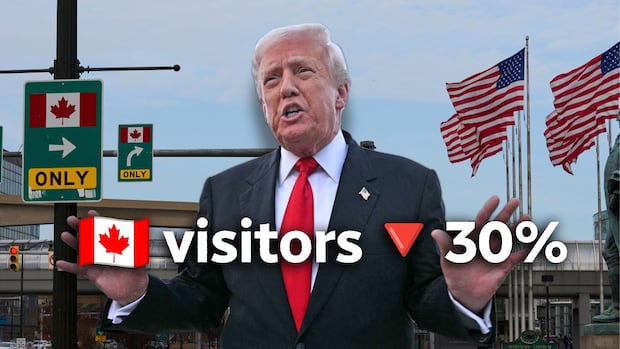
With Canadian travel to the United States significantly declining due to trade tensions and President Donald Trump’s remarks about the ’51st state’, Las Vegas tourism officials are making efforts to win back Canadian visitors. Some establishments are even promoting dollar parity as an incentive.
Many Canadians are exploring new travel options. If the boycott continues, these altered travel habits could solidify into a long-term trend.
“Canadians are not traveling less overall. We are witnessing increased travel to domestic and other international locations,” stated RBC economist Abbey Xu.
“The narrative here is essentially a rebalancing” of where Canadians allocate their vacation expenditures, she added.
Canadians find new destinations
Although Canadian travel to the U.S. saw a double-digit decline in 2025, trips overseas increased by nine percent.
Newman in Fredericton embodies this travel shift.
A decade ago, he took his wife to New York City to celebrate her 65th birthday by attending a Broadway show. He aimed to replicate that experience for her 75th birthday this March. However, instead of Broadway, the couple opted for London, where they attended two musicals — a trip that was significantly more expensive.
“It was absolutely worth it,” Newman remarked. He is now contemplating a journey to Scotland and another to Gaspé, Quebec, to paint landscapes.
“I miss the freedom of traveling to the United States for painting. But there’s an abundance to paint here,” he stated.

Due to his boycott of U.S. travel, Newman is concentrating on Canadian landscapes. His latest project features a waterfall located just outside Fredericton. (Tara King-Stewart/CBC)
The boycott of U.S. travel has also bolstered domestic tourism, which increased by 2.5 percent in 2025.
Canadians may continue to prefer domestic travel if ongoing conflicts, such as the U.S.-Israel and Iran war, drive up jet fuel prices. Many airlines have already implemented fuel surcharges to their airfares to offset these rising costs.
“Increased fuel prices are likely to alter how Canadians travel rather than deter them from traveling altogether,” Xu noted.
“We may observe fewer long-distance trips and an uptick in local travel.”
Las Vegas takes a gamble
The downturn in Canadian visitors has negatively impacted U.S. vacation hotspots, including Las Vegas, which has historically relied on this clientele.
As reported by the city’s tourism board, over 1.4 million Canadians traveled to Las Vegas in 2024. Last year, that figure fell by 18 percent.
In spite of many Canadians’ firm stance against crossing the border, the entertainment and gambling hub is hoping to change some people’s minds.
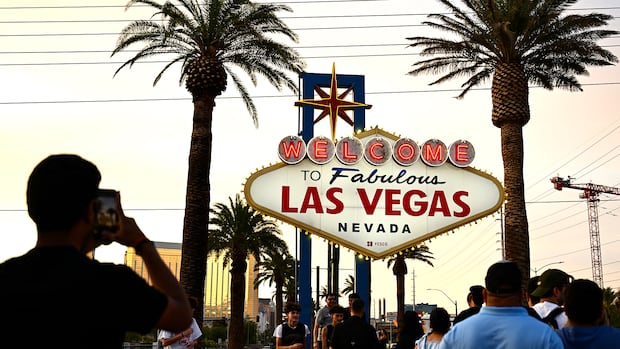
Faced with a significant decrease in Canadian visitation due to trade tensions and President Donald Trump’s statements regarding the ’51st state’, Las Vegas tourism officials are actively promoting their city to win back Canadian tourists. Some locations are even offering dollar parity as an incentive.
Officials from the Las Vegas tourism sector are currently traveling throughout Canada, engaging with travel agents, airlines, and tour operators to communicate that the city is ready to welcome visitors back.
“Undoubtedly, we’ve missed our Canadian friends,” stated Las Vegas casino owner Derek Stevens, who is part of the promotional campaign.
“We want you to return,” he added.
As an incentive, Stevens is providing Canadians with at-par pricing (where a Canadian dollar equals the U.S. dollar) on accommodations and select bars and gambling at his three resorts.
He mentioned that these promotions have already resulted in an increase in Canadian visitors.
“It’s evident that for some Canadians, it’s a very appealing offer.”
However, for others like Newman, more than just discounts and a warm welcome will be necessary to persuade them to cross the border.
“Changes need to happen in the States,” Newman expressed. “Certainly while Trump remains in office, we have no interest in traveling to the States whatsoever.”