
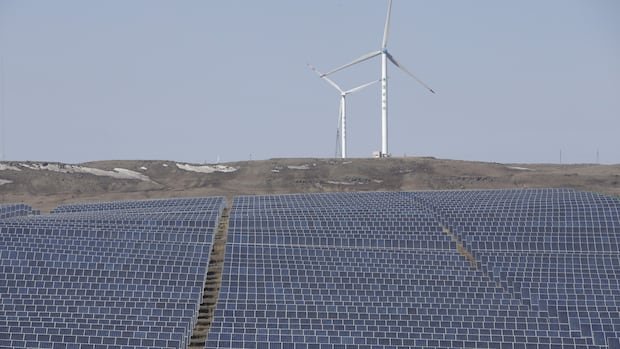

Near the outskirts of the Gobi Desert in China, large wind farms driven by artificial intelligence are producing electricity more affordably than traditional coal power plants. The innovative mind behind this technology, Lei Zhang, is now looking to implement a similar system in remote areas of Canada. Zhang, the billionaire founder of Envision, a prominent green energy company in Shanghai, is renowned for his ability to inspire enthusiasm for cutting-edge energy concepts and turn them into reality.
During a visit to Envision’s headquarters in China, Zhang shared plans that could address Canada’s upcoming energy challenges by potentially adopting Chinese AI technology. This move, however, has raised concerns about granting China control over Canada’s power grid. Zhang highlighted the significant drop in green energy production costs, emphasizing that it is now more economical to build new solar and wind facilities than to maintain existing coal plants.
Central to the success of these green energy systems, according to Zhang, is the integration of AI technology. He explained that AI plays a crucial role in optimizing energy generation from intermittent wind patterns, enabling precise forecasting and real-time grid management at a level unattainable by human operators. Envision’s flagship project, an off-grid facility in China’s Inner Mongolia region, showcases the potential of combining wind power with AI to produce clean energy.
Zhang expressed confidence in replicating this model in Canada, leveraging the country’s vast natural resources to establish self-sufficient energy plants. Discussions with Canadian Prime Minister Mark Carney and other stakeholders indicate a mutual interest in exploring these possibilities. Despite China’s ongoing investment in coal power, Zhang believes that renewable energy, driven by AI, offers a path to abundant and sustainable energy for all.
While some critics raise security concerns over adopting Chinese technology in Canada’s energy infrastructure, Zhang reassured that collaboration would involve close cooperation with local partners and regulators to ensure transparency and security. In contrast to the U.S.’s reluctance towards renewable energy, China’s commitment to green technology underscores a shift towards sustainable energy solutions. Zhang sees this transition as not just a trend but a necessity dictated by scientific principles, with China paving the way for a cleaner energy future, potentially extending its expertise to benefit Canada.