

Voices with close ties to the U.S. military have raised concerns this week regarding a series of boat strikes on suspected drug-carrying vessels in the Western hemisphere conducted by the Trump administration since September 2nd. An anonymous Pentagon official and a retired U.S. Air Force colonel have expressed worries about the impact of focusing on Latin American drug trafficking on U.S. military capabilities globally and the potential unintended consequences, such as hindering cooperation with allies in reducing drug-related deaths.
According to the anonymous Pentagon source, the comparison of drug cartels to terrorist organizations is flawed as cartels lack the structured hierarchy of terrorist groups and are more accessible for interdiction efforts. Retired U.S. Air Force Colonel J. William DeMarco highlighted the importance of perception and messaging in the administration’s actions, suggesting that the strikes are aimed at intimidating Venezuelan President Nicolás Maduro and signaling strength to other global powers like China and Russia.
The boat strikes have resulted in at least 61 fatalities as of the latest reports. The strikes have been interpreted as a potential precursor to regime change in Venezuela, with the U.S. increasing rewards for Maduro’s capture and targeting areas near Venezuela for the strikes.
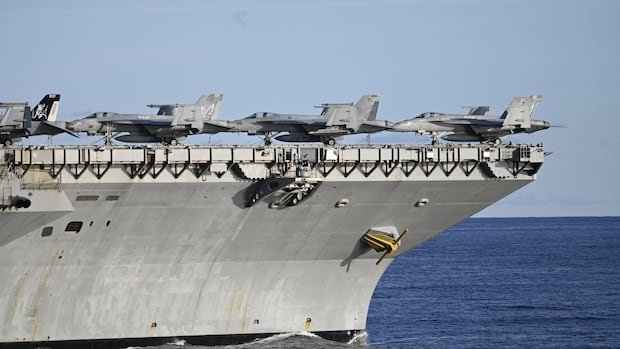
Moreover, the U.S. military has redirected its aircraft carrier USS Gerald R. Ford to South America, leaving no carriers deployed in Europe and the Middle East. This shift in focus comes amid escalating violence in Gaza and ongoing military activities in the region.
Critics have pointed out that while the U.S. is predominantly targeting drug flows, the vessels struck may not always be carrying drugs or heading to North America. Suggestions have been made to address the root cause of drug demand within the U.S. and diversify the approach to combatting drug-related issues.
The Trump administration’s use of lethal force has drawn condemnation from various quarters, with concerns raised about transparency and adherence to international laws. While the long-term implications of these actions remain uncertain, they represent a consistent stance by the administration on combating drug trafficking, as indicated by earlier policy directives dating back to Trump’s presidential campaign.