
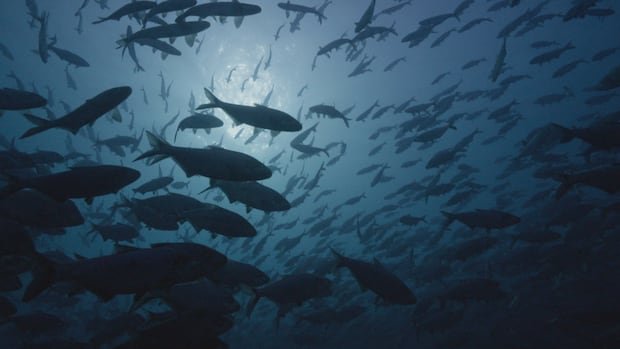

In Lake Huron, near an Ontario nuclear plant, a remarkable sight is unfolding as fish congregate in large numbers in the warm waters. A team of documentary filmmakers, Yvonne Drebert and Zack Melnick, are using an advanced underwater drone, valued at $250,000 and one of only a few in existence globally, to capture detailed footage from parts of the Great Lakes that are typically inaccessible. The filmmakers are preparing for the Earth Day premiere of their latest documentary series, “Hidden Below: the Great Lakes,” showcasing rare wildlife from the largest freshwater ecosystem on the planet.
The underwater drone is focusing on the warm water discharge from the Bruce Nuclear Generating Station, situated near Tiverton, Ontario, where fish gather to seek refuge and feed. The area, known as the “fish city,” attracts a variety of fish species such as gizzard shad, bigmouth buffalo, walleye, bowfin, salmon, trout, catfish, and carp. The filmmakers, Melnick and Drebert, captured stunning 4K footage of the spectacle, revealing millions of shimmering gizzard shad swimming alongside other species in the sunlight.
According to scientists, the warmer water in the plume fosters abundant food sources for the fish, promoting nutrient cycling and algae growth. While the congregation of fish may seem indicative of a thriving ecosystem, experts warn that it could signal a fundamental shift caused by invasive species, particularly zebra and quagga mussels. These mollusks, introduced in the 1980s, have significantly altered the Great Lakes ecosystem by depleting plankton levels, affecting the food chain and habitat.
The presence of these mussels has led to changes in fish behavior, with many species now concentrating around warm water discharges due to reduced food availability in the main lake. As a result, native fish species reliant on colder waters may be adversely impacted, affecting both the ecosystem and local communities, such as the Saugeen Ojibway Nation. Researchers emphasize the importance of monitoring and safeguarding the Great Lakes, given their significance in supporting various sectors and millions of people.
The unusual phenomenon of the “fish city” near the Bruce Nuclear Generating Station raises concerns about the potential environmental impacts of warm water discharges from industrial activities on the ecosystem and its sustainability. It underscores the need for continued research and conservation efforts to protect the delicate balance of the Great Lakes and ensure their long-term health.