
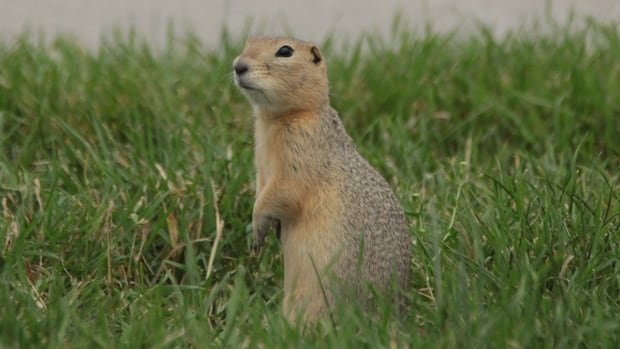

Farmers often face a challenge with gophers, also known as Richardson’s ground squirrels. These creatures may appear cute to some, but they can wreak havoc on crops and equipment, costing farmers thousands of dollars. To control their population, the use of strychnine was banned in 2024 due to the risks it poses to wildlife and its inhumane nature.
In response to the need for gopher control, the Saskatchewan Wildlife Federation initiated a free program to assist farmers. The organization connects farmers with volunteers who are willing to help with gopher management. These volunteers, covered by liability insurance, aim to address the issue responsibly and ethically.
While the program has been beneficial, some like James Husband, reeve of the Rural Municipality of Hazelwood, believe that the gopher population grows faster than it can be controlled. Edmond Sanganyado, an associate professor at the University of Saskatchewan, suggests shooting as a more humane alternative to poison for managing gophers.
Timing is crucial in managing gopher populations, as the best time to address them is when they emerge from hibernation. Farmers are encouraged to act before the gophers breed to minimize the impact on crops. Some farmers have turned to zinc phosphide as an alternative to strychnine, although it is noted to be less effective and more labor-intensive.