
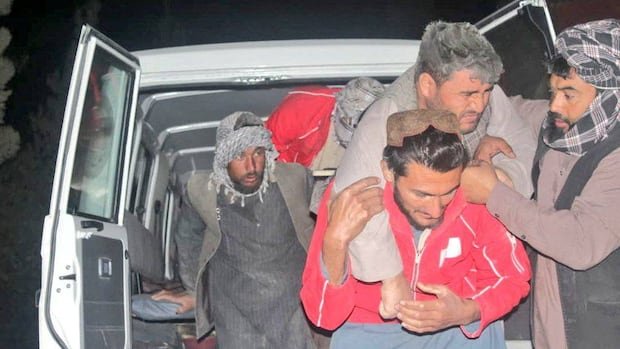

A powerful earthquake with a magnitude of 6.3 struck near the city of Mazar-e Sharif in northern Afghanistan early on Monday, resulting in at least 20 fatalities, hundreds of injuries, and significant damage to the historic Blue Mosque. The U.S. Geological Survey reported the quake’s epicenter at a depth of 28 kilometers close to Mazar-e Sharif, a city with a population of around 523,000 residents.
Survivor Mohammad Rahim, from the Tashqurghan district near the quake’s center, described the violent shaking that lasted about 15 seconds. He mentioned the challenges faced in the aftermath, including dust obstructing visibility. Fortunately, rescue efforts managed to free his trapped mother and brother with the help of local residents and emergency responders.
Preliminary data from the Afghanistan National Disaster Management Authority indicated that the earthquake resulted in 20 confirmed deaths and 643 injuries, with 25 individuals in critical condition. Health Ministry spokesperson Sharfat Zaman assured that rescue teams and medical personnel were mobilized to provide assistance, with hospitals on standby to treat the wounded.
Images released by the Afghan Ministry of Defence depicted military teams engaged in rescue operations, including the recovery of a young girl’s body. The United Nations mission in Afghanistan affirmed its commitment to supporting the affected communities, while India, despite strained relations with the Taliban, pledged humanitarian aid for the earthquake victims.
The earthquake inflicted damage on the Blue Mosque, a revered religious site in Mazar-e Sharif believed to be the final resting place of Prophet Mohammad’s cousin and son-in-law. The structural integrity of the mosque was compromised, with visible destruction in the courtyard captured in social media footage verified by Reuters.
This natural disaster poses additional challenges for Afghanistan’s Taliban-led government, already facing multiple crises, including a previous devastating earthquake, dwindling foreign aid, and refugee deportations. The quake disrupted power supply nationwide, with Kabul experiencing outages, as confirmed by the national power supplier Da Afghanistan Breshna Company.
Save the Children highlighted the heightened humanitarian needs in Afghanistan, exacerbated by the earthquake’s impact just before the harsh winter season. The organization emphasized the vulnerable position of children and families, especially in regions already struggling with inadequate shelter and resources.
Given Afghanistan’s location on active fault lines, seismic events pose a recurring threat. The country recently witnessed significant casualties from previous earthquakes, underscoring the ongoing risk and necessity for preparedness and response efforts at regional and national levels.