
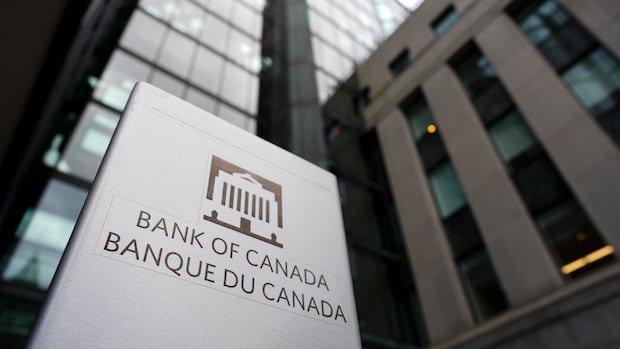

The Bank of Canada decided to maintain its key interest rate at 2.25 percent on Wednesday, in line with expectations. Governor Tiff Macklem indicated that any adjustments to the rate would likely be minimal if the economy progresses as forecasted by the central bank. However, Macklem did not rule out the possibility of future modifications depending on evolving risks.
Macklem emphasized that if the economy follows the base case scenario, changes in the policy rate are expected to be minor. Nevertheless, he highlighted the current high level of uncertainty and the need for agility in monetary policy responses.
The bank is actively monitoring the repercussions of the conflict in Iran, which has led to a surge in energy prices, as well as trade policy uncertainties. While acknowledging the impact of soaring oil prices on inflation, the bank views the overall effect of the war on Canada as modest, with increased export revenues offsetting pressures on businesses and consumers.
Inflation is projected to rise to approximately three percent in April, up from 2.4 percent in March, but is anticipated to average around 2.3 percent for the year before reverting to the bank’s two percent target by early next year. The bank also revised its 2026 growth forecast to 1.2 percent, up from the previous 1.1 percent prediction made in January.
Macklem stressed that current inflation concerns are primarily confined to energy prices, with long-term inflation expectations remaining stable. While short-term inflation expectations have surged due to higher energy and food prices, the bank remains vigilant about anchoring long-term inflation expectations.
Addressing the potential impact of escalating oil prices on inflation, Macklem warned that sustained high energy prices could lead to generalized inflation increases, necessitating consecutive rate hikes. The bank’s assumptions include unchanged U.S. tariffs and a projected decline in oil prices to $75 US per barrel by mid-2027.
Additionally, Macklem highlighted the risk posed by the ongoing trade war, stating that any intensification of trade restrictions by the United States could prompt further rate cuts to bolster the economy. Senior Deputy Governor Carolyn Rogers noted that while the oil crisis has immediate effects, trade tensions could have more enduring consequences.
Economist Avery Shenfeld from CIBC interpreted the bank’s acknowledgment of these factors as an indication of their inclination to maintain a steady stance in the foreseeable future. The next monetary policy decision is scheduled for June 10, with the majority of money markets not anticipating a rate adjustment, although a 25-basis-point hike is being priced in for October.