
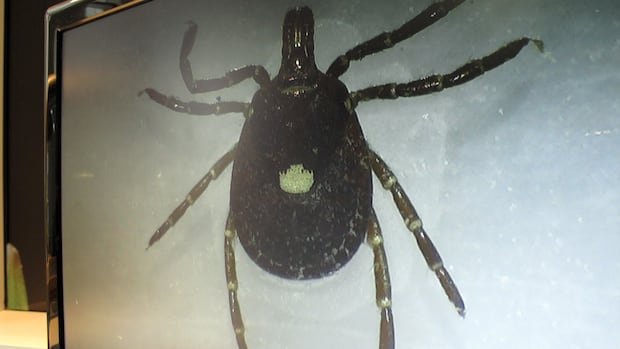

A warning has been issued by researchers regarding an encroaching threat of various tick species carrying harmful diseases making their way into Canada from the United States. Over 40 tick varieties are already present in the country, with the blacklegged tick, known for spreading Lyme disease, being the most familiar. Symptoms of Lyme disease include fever, fatigue, and a distinctive “bull’s-eye” rash, potentially leading to severe complications affecting joints, heart, and the nervous system if untreated.
Nicoletta Faraone, overseeing the newly established Canadian Tick Research and Innovation Centre at Acadia University in Wolfville, Nova Scotia, emphasized the growing apprehension among people due to the spread of tick-borne illnesses. Faraone highlighted the absence of a Lyme disease vaccine despite ticks carrying multiple pathogens, indicating the necessity for alternative protective measures.
Experts warn that tick species carrying dangerous pathogens are gradually inching closer to Nova Scotia from the northern United States at a speed of roughly 50 kilometers annually. While some species have been sighted, they have not yet established a significant presence in the region. Of particular concern is the lone star tick, capable of transmitting an allergy to meat upon biting a person.
The lone star tick has already entrenched itself in Maine, exemplified by Patty O’Brien-Carrier’s experience of developing a severe meat allergy after being bitten, leading to anaphylactic shock post-consumption of beef. The Canadian Tick Research and Innovation Centre intends to study ticks like the lone star tick within its secure premises. Researchers have already succeeded in nurturing a tick to maturity, marking a milestone for the facility.
Additionally, the presence of the Asian long-horned tick in Nova Scotia poses a threat to cattle as it can cause anemia and potentially fatal consequences if left untreated. Farmers like Tim Marsh from Poplar Grove are taking proactive measures by monitoring their livestock closely to prevent any losses.
Faraone stressed the importance of developing new tick-repelling products, especially for rare diseases like the Powassan virus carried by blacklegged ticks, which currently lacks a treatment. Simple precautions such as wearing protective clothing and conducting regular tick checks are crucial in minimizing the risk of tick bites.
As Canada braces for the influx of new tick species and associated health risks, ongoing research and vigilance are essential in combatting the growing threat.