
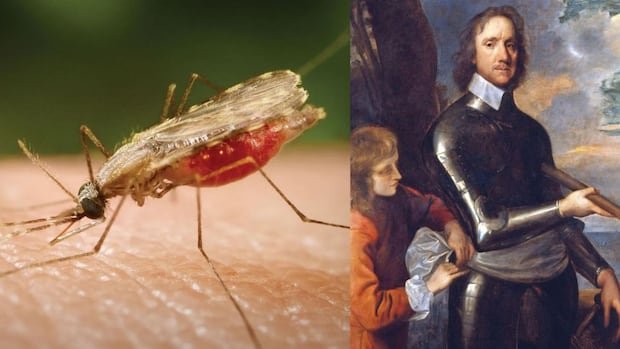

In Cork, Ireland, a city councillor is pushing for the installation of a public statue depicting a mosquito. This particular mosquito is believed by some in Cork to have bitten Oliver Cromwell, an English invader, causing him to contract “Cork fever” (an old term for malaria) ultimately leading to his death.
If the proposal moves forward, it would likely be the smallest public statue globally, according to Green Party councillor Oliver Moran. Moran envisions the petite statue placed on an empty pedestal outside Cork City Hall, along with other potential locations he is considering.
Acknowledging Cromwell’s controversial legacy, Moran highlights the differing views of him depending on whether you are from Ireland or England. In Ireland, Cromwell is associated with brutal military campaigns that resulted in the deaths of hundreds of thousands in the 17th century.
Despite Cromwell’s negative image in Ireland, Moran believes that celebrating the mosquito that supposedly ended his life could resonate with many. The idea for the statue originated from a social media conversation where someone suggested honoring the mosquito responsible for Cromwell’s demise.
When asked about Cromwell’s reputation, Moran explains the contrasting perspectives held in Ireland and England. While some view Cromwell as a hero, in Ireland, he is remembered for the atrocities committed during the Cromwellian campaigns, which resulted in a significant loss of life.
Regarding the statue’s design, Moran is still exploring options and locations for its placement. Possibilities include the empty plinth outside Cork City Hall or within the context of the stone fort in Cork associated with Cromwellian history.
In response to skepticism about the historical accuracy of the mosquito’s role in Cromwell’s death, Moran emphasizes the symbolic value of the story. He sees it as a narrative illustrating the downfall of tyrants by seemingly insignificant forces, highlighting the relationship between the powerful and the humble.
Moran sees the proposed statue not just as a tribute but as a statement on public art in Cork, considering the city’s environment and history, including its marshy origins. By exploring such proposals, he aims to engage with the natural and cultural aspects of the city through artistic expression.