
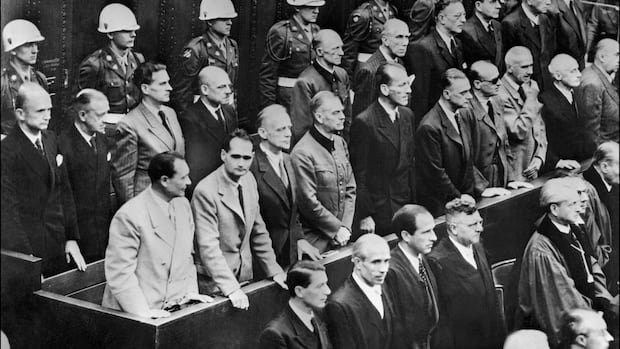

Eight decades following the commencement of the prosecution of Nazi Germany’s leaders for war crimes, the records associated with those trials are now accessible online, free of charge. The Harvard Law School Library spent over 20 years digitizing more than 150,000 Nuremberg Trials documents to create a searchable online database containing analyses, summaries, and images.
Paul Deschner, the technical lead of The Nuremberg Trials Project, emphasized the significance of having access to these documents to comprehend the factors that lead to such events. The project’s website was launched on the 80th anniversary of the trials’ initiation on November 20, 1945.
The Nuremberg Trials aimed to hold accountable the Nazi leaders for the atrocities committed during World War II, including the Holocaust, where six million Jews were murdered. Allied leaders indicted 24 defendants in the initial trial, with 19 convictions and 12 death sentences, one of which was self-inflicted. Subsequent trials led by the United States convicted nearly 200 more Nazis.
Despite the significant impact of the trials in shaping global responses to mass atrocities, Deschner noted a concerning trend of fading memories regarding the trials and the preceding horrors. Deschner highlighted the importance of the collection of Nuremberg Trial documents at Harvard, the second-largest worldwide, outside the U.S. National Archives, which includes transcripts, briefs, and evidence exhibits from all 13 trials.
The meticulous digitization process that began in 1998 ensured the preservation and accessibility of the documents. Deschner stressed the need for detailed organization and searchability of the documents to provide context and understanding. The project serves as an archive of a dark history, allowing people to navigate the present and recognize recurring patterns of atrocities.