
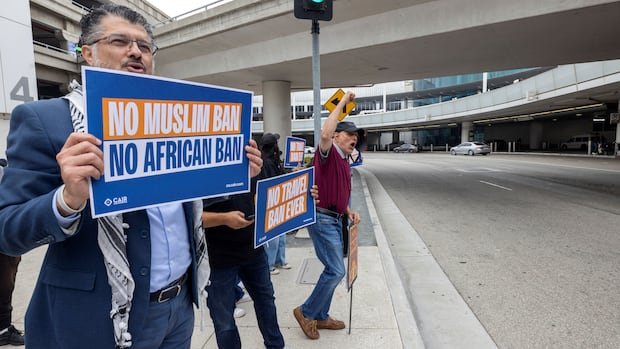

The Trump administration has announced an expansion of the travel ban to include five additional countries along with the Palestinian Authority, while also imposing new restrictions on 15 other nations. This move doubles the number of jurisdictions affected by the previously announced restrictions on travel and immigration to the United States.
Effective January 1, 2026, citizens of Burkina Faso, Mali, Niger, South Sudan, and Syria, as well as individuals traveling on documents issued by the Palestinian Authority, will be barred from entering the U.S. Additionally, citizens of Angola, Antigua and Barbuda, Benin, Dominica, Gabon, Gambia, Ivory Coast, Malawi, Mauritania, Nigeria, Senegal, Tanzania, Tonga, Zambia, and Zimbabwe will face partial restrictions.
The decision to expand the travel ban is part of the administration’s ongoing efforts to enhance U.S. entry standards for travel and immigration. This action follows the recent arrest of an Afghan national in connection with the shooting of two National Guard troops in Washington, D.C., during the U.S. Thanksgiving weekend.
Certain exemptions apply to individuals who already hold visas, are lawful permanent residents, fall under specific visa categories such as diplomats or athletes, or whose entry is deemed to serve U.S. interests. The administration cited reasons such as widespread corruption, unreliable civil documents, criminal records, and high rates of visa overstays in the affected countries as contributing factors to the expanded restrictions.
Critics have raised concerns over the expanded travel ban, arguing that it is unfairly targeting individuals based on their nationality rather than genuine security concerns. The administration defended the decision by pointing to issues of immigration enforcement, foreign policy, and national security.
The updated restrictions also impact Palestinians, with tighter limitations on travel and emigration to the U.S. In response to the changes, advocates for Afghans who supported the U.S. during the Afghanistan conflict expressed concerns over the removal of an exception for those eligible for the Special Immigrant Visa.
Several affected countries are evaluating the implications of the new restrictions. Dominica and Antigua and Barbuda have expressed seriousness and urgency in seeking clarification from U.S. officials regarding the imposed restrictions.