
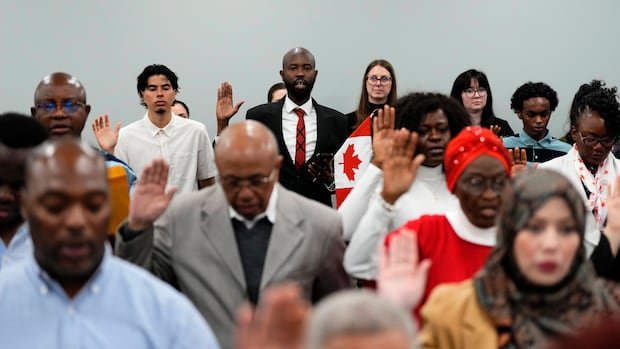

The legislation known as the “Lost Canadians” bill, designed to address Canada’s unconstitutional citizenship laws for descendants, was approved by the Senate on Wednesday and granted royal assent on Thursday. This legislation targets individuals born outside Canada to Canadian parents who were also born abroad.
In 2009, changes to the law stipulated that Canadians born abroad could only transmit citizenship if their child was born in Canada, a provision later deemed unconstitutional by the Ontario Superior Court in December 2023. Under the newly passed legislation, Canadian citizenship can now be transmitted to individuals born abroad, extending beyond the first generation, provided that the parents spent a combined three years in Canada before the child’s birth or adoption.
Senator David Arnot from Saskatchewan raised concerns about the bill’s application of a “substantial connection” test to “intercountry adoptees,” referring to children adopted internationally by Canadian parents and raised in Canada. He emphasized that these adoptees undergo stringent immigration processes before their adoption is finalized, including provincial and territorial approvals, anti-trafficking screenings, foreign state approvals, federal citizenship reviews, and other measures.
Arnot stressed the need for equal treatment of intercountry adoptees and domestic adoptees, citing the requirements of the Hague Convention. While he did not propose amendments due to a court-mandated deadline for the law’s enactment by January 20, he urged the immigration minister to consider future changes.
There are potential legal challenges on behalf of intercountry adoptees, with immigration lawyers Sujit Choudhry and Maureen Silcoff retained for a potential Charter challenge. They argue that treating internationally adopted children differently from domestically adopted children violates their rights and Canada’s international treaty obligations.
Choudhry highlighted concerns that internationally adopted children must meet the substantial connection test when their Canadian parents bring them home, unlike domestically adopted children. This discrepancy, he argued, amounts to discrimination prohibited by Section 15 of the Charter and is inconsistent with Canada’s international commitments.
Efforts to clarify adoption rules through amendments were made by Ontario Liberal MP Nate Erskine-Smith and B.C. NDP MP Jenny Kwan, but these attempts were unsuccessful. Amendments proposed during the legislation’s consideration in the House of Commons regarding the three-year requirement in the substantial connection test were removed by Liberal and NDP MPs before the bill advanced to the Senate. Quebec Conservative Sen. Leo Housakos later attempted to reintroduce this amendment in the Senate, but it was ultimately rejected.